
Introduction
Understanding BPPV (Positional Vertigo)
The vestibular system in the inner ear plays an important role in balance, spatial awareness, and coordinating head movements with vision. When this system is affected, everyday movements can sometimes trigger dizziness or a spinning sensation.
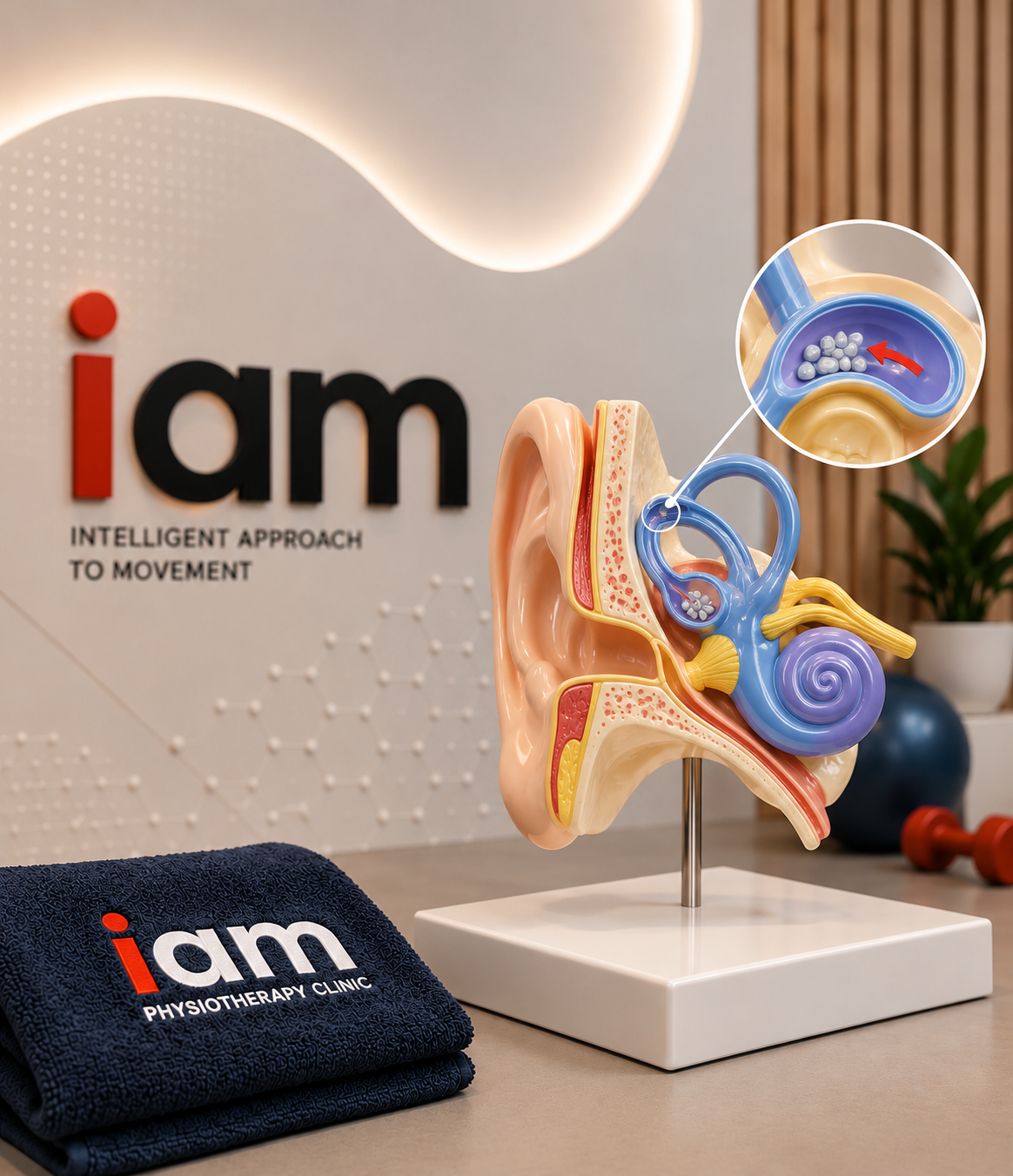
BPPV occurs when tiny calcium carbonate crystals, called otoconia, become displaced from their usual location and enter one of the semicircular canals in the inner ear. These crystals can interfere with the signals that help the brain interpret head movement, causing brief episodes of vertigo when the head moves into certain positions.
Common symptoms include spinning sensations when rolling over in bed, dizziness when looking up or bending down, nausea during episodes, and temporary unsteadiness after changing position. Although BPPV is generally treatable, other conditions can also cause dizziness, so an appropriate assessment is important before selecting treatment.
At IAM Physiotherapy Clinic in Newmarket, our physiotherapists assess your symptoms, positional triggers, balance, eye movements, mobility, and relevant medical history. When findings indicate BPPV, treatment may include appropriate positional testing and canalith repositioning manoeuvres, such as the Epley manoeuvre for suitable cases. Additional balance or vestibular rehabilitation exercises may be recommended when needed.
We proudly support patients across Newmarket, Aurora, Bradford, East Gwillimbury, Richmond Hill, and York Region with individualised physiotherapy designed to address positional vertigo and support a confident return to daily activities.
Causes
Common Vestibular Conditions We Assess and Treat
Our physiotherapists in Newmarket help assess positional vertigo and related vestibular symptoms that may affect balance, movement, and everyday activities.
- Benign Paroxysmal Positional Vertigo (BPPV)
BPPV causes brief episodes of spinning when specific head movements displace inner-ear crystals and stimulate the balance system incorrectly.
- Positional Dizziness
Dizziness triggered by lying down, sitting up, rolling over, or changing head position may indicate a positional vestibular problem that requires assessment.
- Vertigo When Turning in Bed
Rolling from one side to the other or lying back may trigger a brief spinning sensation in individuals with certain types of BPPV.
- Dizziness When Looking Up or Bending Down
Tilting the head backwards or forwards can trigger vertigo when displaced inner-ear crystals affect the semicircular canals.
- Nausea Associated With Vertigo
Some individuals experience nausea or discomfort during or shortly after an episode of positional vertigo.
- Balance Difficulties After Vertigo Episodes
Temporary unsteadiness may remain after a spinning episode and can affect confidence when standing or walking.
- Recurring Positional Vertigo
BPPV can return after successful treatment, and a reassessment may help identify whether another repositioning manoeuvre is appropriate.
- Other Vestibular Causes of Dizziness
Not all dizziness is caused by BPPV. Vestibular migraine, other inner-ear conditions, and non-vestibular causes may require different assessment and management approaches.
Approach
How We Support BPPV Recovery
At IAM Physiotherapy Clinic, we develop individualised treatment plans based on your symptoms, positional testing findings, affected inner-ear canal, balance, medical history, and functional needs.
- Comprehensive Vestibular Assessment
Our physiotherapists review your dizziness history, symptom triggers, balance, eye movements, and relevant medical information to determine whether your symptoms may be consistent with BPPV.
- Positional Testing
When clinically appropriate, specific positional tests can help identify the affected side and semicircular canal. These tests are selected according to your symptoms, physical abilities, and relevant precautions.
- Canalith Repositioning Manoeuvres
Repositioning manoeuvres are designed to guide displaced inner-ear crystals out of the affected semicircular canal and back towards their appropriate location. The technique depends on the type of BPPV identified.
- Epley Manoeuvre for Appropriate BPPV Cases
The Epley manoeuvre is commonly used for posterior canal BPPV when assessment findings support its use. Your physiotherapist determines whether it is suitable for your condition.
- Balance & Stability Training
Balance exercises may be introduced when unsteadiness or reduced confidence remains after treatment, helping you practise safe and controlled movement.
- Vestibular Rehabilitation Exercises
Individualised vestibular exercises may help address persistent balance or movement-related difficulties when clinically indicated. These exercises are not a substitute for repositioning manoeuvres when active BPPV is the primary problem.
- Guidance for Daily Activities
Your physiotherapist can provide practical advice on managing symptoms, moving safely, and returning to everyday activities according to your assessment findings and recovery progress.
WHY CHOOSE IAM PHYSIOTHERAPY CLINIC
Why Patients Choose IAM Physiotherapy Clinic for BPPV Rehabilitation
Patients across Newmarket and York Region can access individualised physiotherapy assessment and rehabilitation for positional vertigo, dizziness, and related balance difficulties.
- Individualised Vestibular Assessment
Our physiotherapists consider your symptom pattern, positional triggers, mobility, balance, and medical history when determining the appropriate next steps.
- Condition-Specific Treatment
When BPPV is identified, treatment can include appropriate repositioning manoeuvres selected according to the affected inner-ear canal and clinical findings.
- Personalised Rehabilitation Plans
Treatment is adapted to your symptoms, physical abilities, activity requirements, and recovery goals rather than following a one-size-fits-all approach.
- Focus on Balance & Functional Recovery
When needed, rehabilitation may address lingering unsteadiness, movement confidence, and difficulties with walking or other everyday activities.
Signs That Should Not Ignore
Signs You May Benefit from BPPV Assessment
Consider scheduling an assessment if you experience:
- Spinning when rolling over in bed
- Dizziness when lying down or sitting up
- Vertigo when looking up
- Dizziness when bending down
- Brief episodes of spinning with head movement
- Nausea associated with positional dizziness
- Unsteadiness after a vertigo episode
- Recurring positional vertigo
- Reduced confidence with everyday head movements
- Difficulty returning to usual activities because of dizziness
- Persistent balance difficulties after positional vertigo
- Repeated episodes of dizziness that have not been assessed
An assessment can help determine whether your symptoms are consistent with BPPV or whether another cause of dizziness needs to be considered. Sudden or unexplained dizziness should not automatically be assumed to be BPPV.
Importance Of Vestibular Physiotherapy
Benefits of BPPV Physiotherapy
When BPPV is correctly identified, appropriate treatment can help support:
- Relief from positional vertigo symptoms
- Improved tolerance to specific head movements
- Reduced dizziness during position changes
- Improved confidence when rolling over in bed
- Greater comfort when lying down or sitting up
- Improved balance when unsteadiness persists
- Better tolerance for everyday movement
- Improved confidence with routine activities
- Support for returning to normal daily routines
- Identification of recurring positional symptoms
- Guidance on appropriate management if symptoms return
- Individualised care based on vestibular assessment findings
Why Choose
IAM Physiotherapy Clinic


The Next Evolution of Rehab
Precision Movement. Clinical Excellence.
At IAM Physiotherapy Clinic in Newmarket, we blend elite biomechanics with targeted spinal and musculoskeletal recovery. We don’t just treat symptoms—we optimize your body’s physical architecture so you can live without limits.
Book Appointment
Meet Our Award-Winning Team
A Multidisciplinary Team Dedicated to Your Health, Recovery, and Well-Being
At IAM Physiotherapy Clinic, our experienced and registered practitioners work together to deliver personalized care that helps you move better, improve function, and maintain long-term wellness.





Patient Experiences
Real Stories. Real Recoveries.
See what patients say about their recovery journey at IAM Physiotherapy Clinic. Our commitment to expert care and personalized treatment has helped hundreds of patients regain mobility and improve their quality of life.


Expert Physiotherapy Care Starts Here
Book Your Physiotherapy Visit – Simple & Convenient
Our team is here to help you recover from injuries, reduce pain, and improve mobility. Book your appointment today and let our experienced team guide you toward lasting recovery.
- Call Now (289) 466-1140
- Our Location 1065 Davis Dr – Unit 3, Newmarket
- Email Us info@iamphysioclinic.com

Frequently Asked Questions
BPPV (Positional Vertigo) Physiotherapy in Newmarket – FAQs
BPPV is a common inner-ear condition that causes brief episodes of spinning or vertigo when the head changes position. It occurs when tiny calcium carbonate crystals become displaced into the semicircular canals of the inner ear, disrupting normal balance signals. Common triggers include rolling over in bed, looking up, bending down, or sitting up from a lying position.
Common symptoms of BPPV include brief spinning sensations, dizziness when changing head position, nausea during vertigo episodes, and temporary unsteadiness. Symptoms are often triggered by specific movements, such as turning over in bed or tilting the head backwards. A clinical assessment can help determine whether these symptoms are consistent with BPPV or another condition.
Yes. Vestibular physiotherapy can help treat BPPV through appropriate positional testing and canalith repositioning manoeuvres. At IAM Physiotherapy Clinic in Newmarket, assessment findings help guide treatment selection according to the affected inner-ear canal, symptoms, and individual needs. Additional balance rehabilitation may be recommended if unsteadiness continues after treatment.
The Epley manoeuvre is a specialised series of head and body movements used to treat certain types of BPPV, particularly posterior canal BPPV. It helps guide displaced inner-ear crystals out of the affected semicircular canal. A trained healthcare professional can determine whether this manoeuvre is appropriate based on the assessment findings.
The number of sessions required for BPPV treatment varies depending on the affected inner-ear canal, symptom severity, response to repositioning manoeuvres, and whether additional balance problems are present. Some people improve after one treatment session, while others may need reassessment or further treatment. Your physiotherapist can recommend an appropriate plan based on your progress.
BPPV symptoms can sometimes improve spontaneously as displaced inner-ear crystals move out of the affected canal. However, symptoms may persist or return and can interfere with daily activities. An assessment can help confirm the likely cause of positional dizziness and determine whether a repositioning manoeuvre or another treatment approach is appropriate.
Dizziness when rolling over in bed, looking up, or bending down can be associated with BPPV. These movements may cause displaced crystals in the inner ear to stimulate the balance system abnormally. However, other conditions can also cause positional dizziness, so a proper assessment is important before starting treatment.
Yes. BPPV can recur even after successful treatment. If spinning sensations return when changing head position, a reassessment can help determine whether BPPV has returned and whether another repositioning manoeuvre is needed. Persistent or changing symptoms should also be evaluated for other possible causes.
Vestibular physiotherapy may help with certain causes of dizziness, including BPPV and some other vestibular conditions. However, different causes require different treatments. A physiotherapist can assess relevant symptoms and movement difficulties, while unexplained, persistent, or concerning dizziness may require medical evaluation before or alongside rehabilitation.
Most extended health insurance plans cover physiotherapy treatment. iam Physiotherapy Clinic also offers direct billing for many insurance providers.
You can book your physiotherapy appointment online through iam Physiotherapy Clinic or contact our team directly for assistance.