Introduction
Understanding Gaze Stability & Dizziness with Head Movement
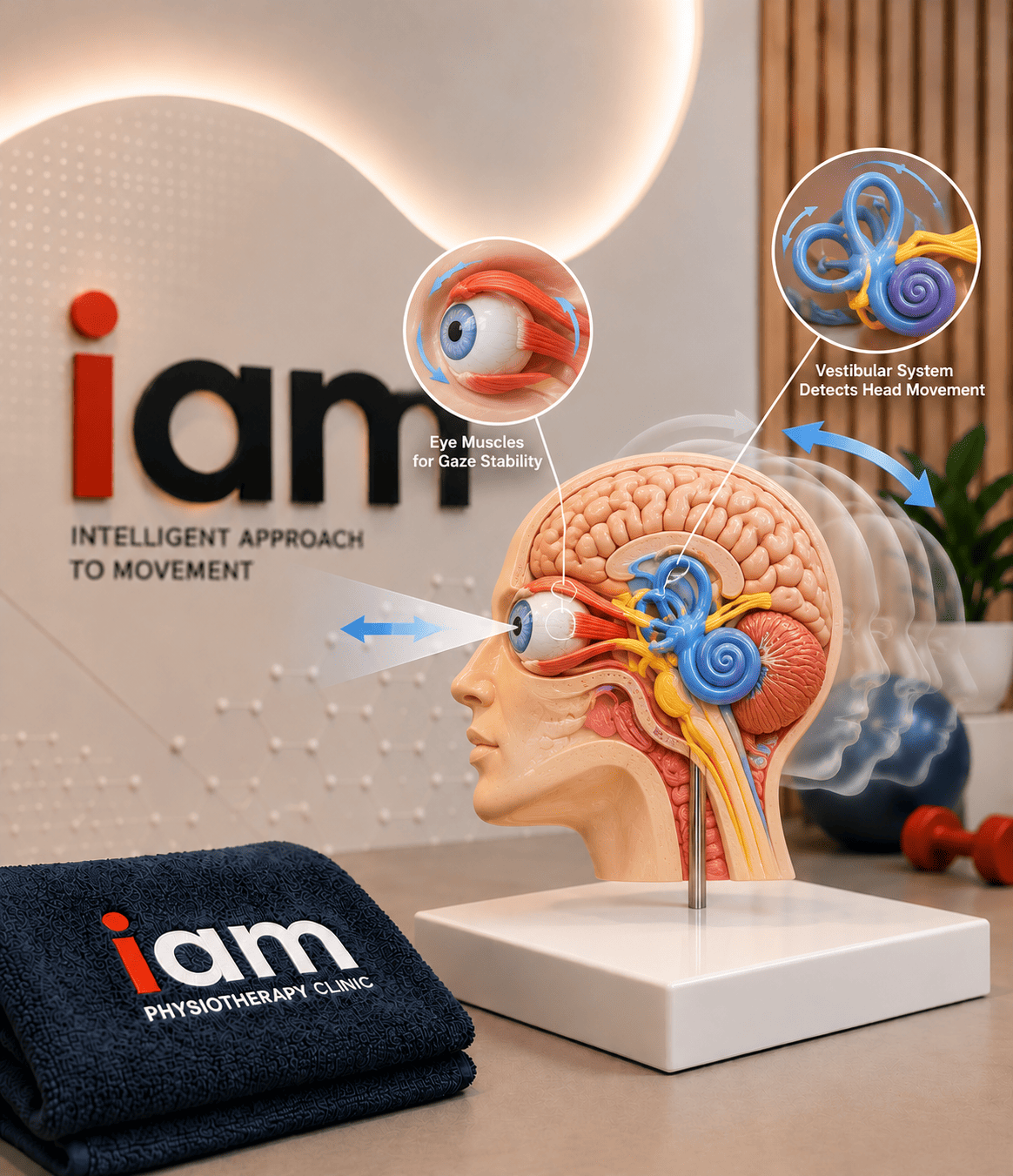
Gaze stability is the ability to maintain clear vision while the head moves. The vestibular system in the inner ear works with the eyes and brain to keep images relatively stable during activities such as walking, turning the head, and changing direction. When this coordination is disrupted, individuals may experience blurred vision, a sensation that the surroundings are bouncing, dizziness, or unsteadiness during movement.
These symptoms may be associated with vestibular hypofunction, certain inner-ear conditions, previous episodes of vertigo, or other medical conditions. Some individuals notice symptoms mainly when moving their heads, while others experience difficulty maintaining visual focus during walking or physical activity.
Common symptoms include blurred vision during head turns, dizziness when looking from side to side, difficulty focusing on objects while walking, and a feeling that the environment moves or bounces during movement. These difficulties may affect driving, reading signs, shopping, exercising, and other daily activities.
At IAM Physiotherapy Clinic in Newmarket, our physiotherapists assess your symptoms, gaze stability, eye and head coordination, balance, walking ability, movement tolerance, and relevant medical history. Based on the findings, your personalised rehabilitation program may include gaze stabilisation exercises, vestibulo-ocular reflex training, balance exercises, gait retraining, and functional movement rehabilitation where appropriate.
We proudly support patients across Newmarket, Aurora, Bradford, East Gwillimbury, Richmond Hill, and York Region with individualised physiotherapy designed to address appropriate vestibular and balance-related concerns.
Causes
Common Conditions Associated With Gaze Instability & Dizziness
Our physiotherapists in Newmarket help assess gaze instability, dizziness with head movement, and related vestibular symptoms that may affect visual focus, balance, and mobility.
- Vestibular Hypofunction
Reduced function of one or both vestibular systems can interfere with gaze stability and balance, sometimes causing blurred vision or unsteadiness during head movement.
- Gaze Instability
Difficulty keeping objects visually clear while the head moves can affect activities such as walking, turning, and looking around during daily tasks.
- Dizziness During Head Movement
Turning the head, looking up, bending down, or changing direction may trigger dizziness in individuals with certain vestibular or other medical conditions.
- Benign Paroxysmal Positional Vertigo (BPPV)
BPPV causes brief episodes of spinning triggered by particular head positions. It may require positional testing and specific repositioning manoeuvres rather than gaze stabilisation exercises alone.
- Motion Sensitivity
Some individuals experience dizziness or visual discomfort when moving their heads, travelling in a vehicle, or navigating busy visual environments.
- Vestibular Migraine
Vestibular migraine can cause dizziness, vertigo, and sensitivity to movement, sometimes with headache, light sensitivity, or sound sensitivity.
- Balance and Gait Difficulties
Gaze instability may occur alongside unsteadiness, reduced walking confidence, or difficulty coordinating head and body movements.
- Post-Concussion Vestibular Symptoms
Following a concussion, some individuals experience visual instability, dizziness, and difficulty coordinating head and eye movements during everyday activities.
Approach
How We Support Gaze Stability & Vestibular Rehabilitation
At IAM Physiotherapy Clinic, we develop individualised rehabilitation programs based on your symptoms, clinical assessment, movement tolerance, visual stability, and recovery goals.
- Comprehensive Vestibular Assessment
Our physiotherapists assess your dizziness history, eye and head coordination, gaze stability, balance, walking ability, and relevant medical history to identify impairments that may benefit from rehabilitation.
- Gaze Stabilisation Exercises
Appropriately prescribed exercises involve maintaining visual focus on a target while moving the head. These exercises may help improve gaze stability when vestibular dysfunction affects visual clarity during movement.
- Vestibulo-Ocular Reflex (VOR) Training
VOR exercises are designed to address difficulties with the reflex that coordinates eye movement with head movement. The type and intensity of exercise depend on your assessment findings and individual needs.
- Graded Head Movement Exercises
Controlled head movements may be introduced and progressed according to your symptoms and tolerance to improve functional movement where clinically appropriate.
- Balance and Postural Control Training
Balance exercises can help improve stability and coordination when standing, walking, turning, or performing activities that require simultaneous head and body movements.
- Gait and Walking Retraining
Walking exercises may help you practise maintaining stability and visual focus while turning your head, changing direction, or moving through different environments.
- Functional Movement Rehabilitation
Your physiotherapist can gradually adapt rehabilitation to everyday activities, such as walking while looking around, navigating busy spaces, and returning to appropriate exercise.
WHY CHOOSE IAM PHYSIOTHERAPY CLINIC
Why Patients Choose IAM Physiotherapy Clinic for Gaze Stability Rehabilitation
Patients across Newmarket and York Region can access individualised physiotherapy assessment and rehabilitation for gaze instability, dizziness with head movement, and related vestibular concerns.
- Individualised Assessment
Our physiotherapists consider your symptoms, visual stability, head movement tolerance, balance, and functional limitations when planning appropriate care.
- Personalised Treatment Programs
Exercises are selected according to your clinical findings, physical abilities, symptom response, and rehabilitation goals.
- Progressive Rehabilitation
Exercise intensity and complexity are adjusted according to your tolerance and progress, with the aim of improving functional movement without unnecessarily aggravating symptoms.
- Focus on Everyday Function
Our goal is to help you improve visual stability and movement confidence during appropriate daily activities, including walking, turning your head, shopping, and exercising.
Signs That Should Not Ignore
Signs You May Benefit from Balance Problems & Unsteadiness Physiotherapy
Consider scheduling an assessment if you experience:
- Feeling unsteady while walking
- Swaying when standing still
- Difficulty maintaining balance on uneven surfaces
- Stumbling or losing balance frequently
- Difficulty turning or changing direction
- Reduced confidence when climbing stairs
- Difficulty standing on one leg
- Leg weakness affecting walking stability
- Dizziness accompanied by balance difficulties
- Difficulty walking in low-light environments
- Reduced confidence with daily physical activities
- Balance problems following an injury or vestibular episode
An assessment can help identify movement limitations and determine whether physiotherapy may be appropriate. Persistent, unexplained, or worsening balance problems may also require medical evaluation.
Importance Of Vestibular Physiotherapy
Benefits of Gaze Stability & Dizziness Physiotherapy
A personalised vestibular rehabilitation program may help support:
- Improved gaze stability during head movement
- Better visual focus during walking
- Improved coordination between eye and head movements
- Greater tolerance for necessary head movements
- Better balance and postural control
- Improved walking coordination
- Greater confidence with everyday movement
- Improved tolerance for appropriate physical activity
- Better management of movement-related symptoms
- Improved participation in daily activities
- Individualised strategies for managing vestibular symptoms
- Gradual return to activities affected by visual instability
Outcomes depend on the underlying condition, the nature of the vestibular impairment, and individual response to rehabilitation. Not everyone experiencing dizziness requires gaze stabilisation exercises, so assessment is important before selecting treatment.
Why Choose
IAM Physiotherapy Clinic


The Next Evolution of Rehab
Precision Movement. Clinical Excellence.
At IAM Physiotherapy Clinic in Newmarket, we blend elite biomechanics with targeted spinal and musculoskeletal recovery. We don’t just treat symptoms—we optimize your body’s physical architecture so you can live without limits.
Book Appointment
Meet Our Award-Winning Team
A Multidisciplinary Team Dedicated to Your Health, Recovery, and Well-Being
At IAM Physiotherapy Clinic, our experienced and registered practitioners work together to deliver personalized care that helps you move better, improve function, and maintain long-term wellness.





Patient Experiences
Real Stories. Real Recoveries.
See what patients say about their recovery journey at IAM Physiotherapy Clinic. Our commitment to expert care and personalized treatment has helped hundreds of patients regain mobility and improve their quality of life.


Expert Physiotherapy Care Starts Here
Book Your Physiotherapy Visit – Simple & Convenient
Our team is here to help you recover from injuries, reduce pain, and improve mobility. Book your appointment today and let our experienced team guide you toward lasting recovery.
- Call Now (289) 466-1140
- Our Location 1065 Davis Dr – Unit 3, Newmarket
- Email Us info@iamphysioclinic.com
Frequently Asked Questions
Gaze Stability & Dizziness Physiotherapy in Newmarket – FAQs
Gaze stability is the ability to keep an object in focus while the head moves. It depends partly on the vestibulo-ocular reflex, which coordinates eye movements with head movements. When this system is impaired, activities such as walking, turning the head, or looking around may cause blurred vision, dizziness, or visual instability.
Dizziness during head movement can be associated with vestibular dysfunction, BPPV, vestibular migraine, or other medical conditions. The duration and type of dizziness, along with the movements that trigger it, can help guide assessment. A physiotherapist or other appropriate healthcare professional can help determine whether vestibular rehabilitation or further medical evaluation is needed.
Yes. Vestibular physiotherapy may help people whose gaze instability is related to a condition that responds to rehabilitation. Treatment may include gaze stabilisation exercises, VOR training, balance exercises, and functional movement practice. At IAM Physiotherapy Clinic in Newmarket, treatment is tailored to assessment findings and individual goals.
Gaze stabilisation exercises typically involve keeping the eyes focused on a stationary target while moving the head in a controlled manner. They are used in certain vestibular rehabilitation programs to address impaired visual stability during head movement. Exercise selection, speed, duration, and progression should be based on the individual’s condition and tolerance.
The vestibulo-ocular reflex is a system that helps keep vision stable when the head moves. It allows the eyes to move in the opposite direction to head movement so that an object can remain in focus. If the reflex is impaired, a person may experience blurred or bouncing vision, especially during walking or rapid head turns.
The time required varies according to the underlying vestibular condition, severity of symptoms, duration of the problem, and response to rehabilitation. Some individuals improve over several weeks, while others may require a longer program. Your physiotherapist can monitor progress and adjust exercises according to your clinical findings and tolerance.
Yes. Vestibular dysfunction can cause difficulty keeping visual images stable during head movement. Some people describe blurred vision or a bouncing sensation, particularly while walking or moving the head quickly. These symptoms should be assessed because visual disturbances can have other causes that require medical attention.
No. Gaze stabilisation exercises are used to address certain difficulties with visual stability during head movement. BPPV is caused by displaced inner-ear crystals and is commonly treated with specific canalith repositioning manoeuvres when indicated. An assessment helps determine which treatment, if any, is appropriate.
Vestibular physiotherapy may help selected individuals with dizziness, gaze instability, or balance difficulties following a concussion. Depending on the assessment, treatment may include gaze stabilisation, balance exercises, and graded movement activities. Concussion rehabilitation should be individualised, and new or worsening symptoms require medical evaluation.
Most extended health insurance plans cover physiotherapy treatment. iam Physiotherapy Clinic also offers direct billing for many insurance providers.
You can book your physiotherapy appointment online through iam Physiotherapy Clinic or contact our team directly for assistance.