
Introduction
Understanding Nerve Irritation & Foot Weakness
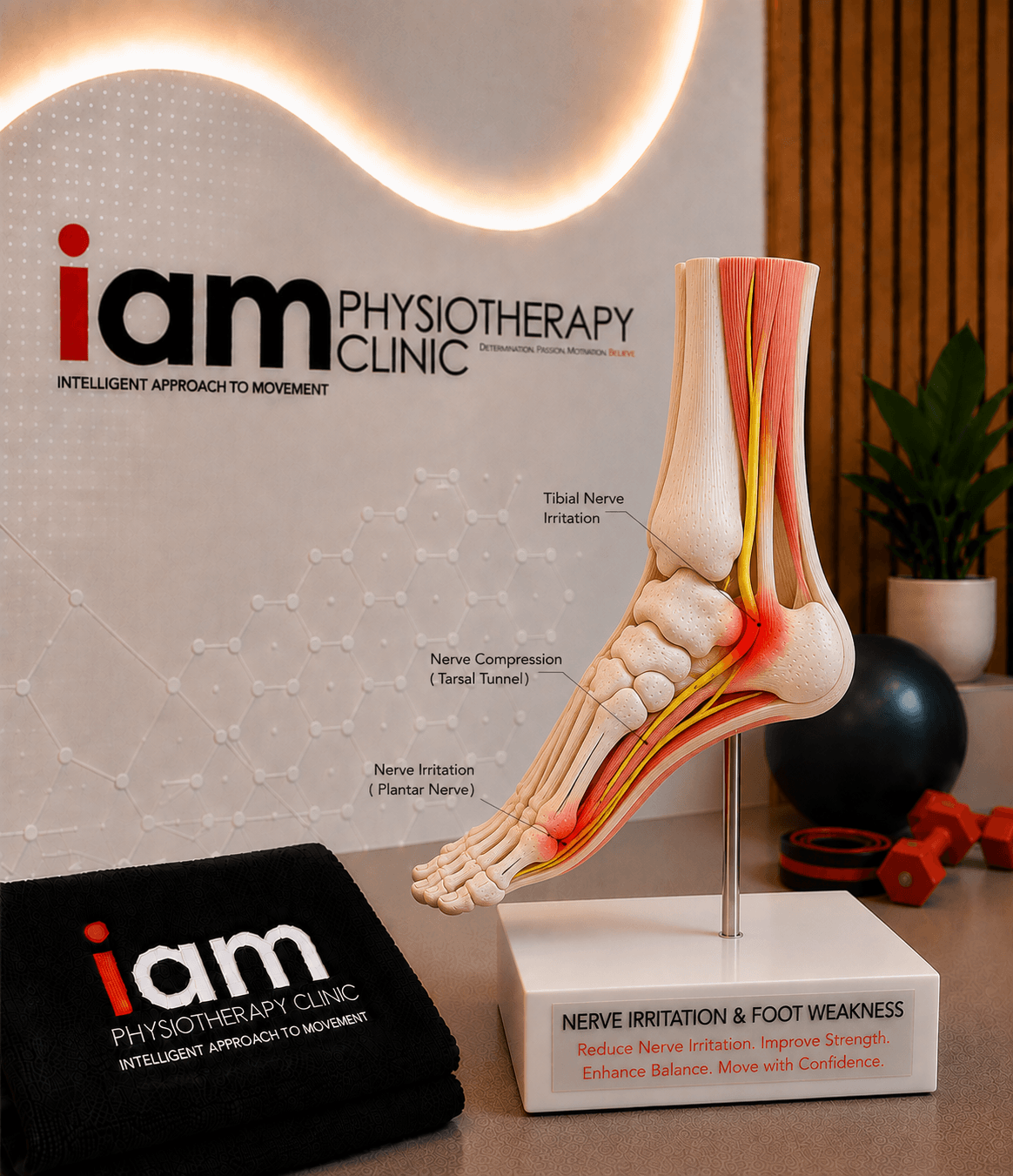
Nerves play an important role in communicating signals between the brain, spinal cord, muscles, and other parts of the body. When a nerve becomes irritated or compressed, it can contribute to symptoms such as pain, tingling, numbness, altered sensation, or muscle weakness.
Nerve-related symptoms affecting the foot may sometimes originate around the lower back, hip, leg, ankle, or foot. Conditions such as sciatica, nerve compression, peripheral nerve irritation, or certain injuries may contribute to changes in sensation or muscle function.
Foot weakness can affect the ability to lift the foot, push off during walking, maintain balance, or control the ankle. Some individuals may notice that their foot feels unstable, their toes catch on the ground, or they have difficulty walking on their heels or toes.
At IAM Physiotherapy Clinic in Newmarket, our physiotherapists assess your symptoms, strength, sensation, mobility, balance, walking pattern, posture, and functional movement. Based on your assessment, we create a personalized rehabilitation program that may include therapeutic exercises, strengthening, mobility work, balance training, movement retraining, neural mobility exercises where appropriate, and functional rehabilitation.
We proudly support patients across Newmarket, Aurora, Bradford, East Gwillimbury, Richmond Hill, and York Region with individualised physiotherapy focused on improving movement and supporting a safe return to daily activities.
Causes
Common Nerve & Foot Conditions We Treat
Our physiotherapists in Newmarket help patients manage nerve-related symptoms, foot weakness, balance problems, and related lower-limb conditions.
- Nerve Irritation
Irritation or compression of a nerve may cause pain, tingling, numbness, altered sensation, or weakness along its pathway.
- Sciatica-Related Foot Symptoms
Irritation of nerves originating from the lower back can sometimes cause symptoms that extend through the leg and into the foot.
- Foot Weakness
Weakness in the muscles controlling the foot or ankle can affect walking, balance, stair climbing, and other functional activities.
- Foot Drop
Difficulty lifting the front part of the foot can cause the toes to catch on the ground and may result in changes to walking mechanics.
- Numbness & Tingling
Altered sensation in the foot or lower limb may occur when nerves are irritated or affected by different conditions.
- Burning or Pins-and-Needles Sensations
Nerve-related symptoms can sometimes include burning, pins-and-needles, or unusual sensations in the foot or lower leg.
- Ankle Weakness & Instability
Reduced muscle control around the ankle may affect stability and increase difficulty with walking and balance.
- Balance & Walking Difficulties
Changes in strength, sensation, or coordination can affect walking mechanics and confidence during weight-bearing activities.
Approach
How We Support Nerve Irritation & Foot Weakness Recovery
At IAM Physiotherapy Clinic, we create individualised rehabilitation programs based on your symptoms, physical assessment, functional limitations, and recovery goals.
- Comprehensive Neurological & Movement Assessment
Our physiotherapists assess muscle strength, sensation, mobility, balance, coordination, walking mechanics, posture, and functional movement to understand how your symptoms are affecting your daily activities.
- Strength & Motor Control Training
Targeted exercises can help improve the strength and control of muscles involved in foot, ankle, and lower-limb movement.
- Balance & Stability Training
Balance exercises can help improve stability and confidence when standing, walking, changing direction, and performing everyday activities.
- Neural Mobility Exercises
Where clinically appropriate, specific exercises may be used to support comfortable nerve movement and improve tolerance to certain movements.
- Foot & Ankle Mobility
Mobility exercises can help address restrictions affecting the foot, ankle, and lower limb and support more efficient movement.
- Gait & Movement Retraining
We assess your walking pattern and provide individualised strategies to improve foot clearance, stability, coordination, and movement efficiency.
- Functional Rehabilitation
Exercises are progressively incorporated into activities such as walking, stairs, standing, and other movements that are important to your daily life.
- Home Exercise Program
Your physiotherapist can provide a personalised home exercise program to help reinforce strength, mobility, balance, and movement improvements between appointments.
WHY CHOOSE IAM PHYSIOTHERAPY CLINIC
Why Patients Choose IAM Physiotherapy Clinic for Nerve & Foot Rehabilitation
Patients across Newmarket and York Region choose IAM Physiotherapy Clinic for individualized physiotherapy programs designed to address nerve irritation, foot weakness, altered sensation, balance problems, and walking difficulties.
- Experienced Physiotherapy Team
Our physiotherapists use evidence-based assessment and rehabilitation strategies to address movement limitations associated with nerve irritation and lower-limb weakness.
- Personalised Treatment Programs
Every treatment plan is adapted to your symptoms, physical condition, functional abilities, lifestyle, and individual recovery goals.
- Comprehensive Movement Assessment
We assess strength, mobility, balance, coordination, walking mechanics, and functional movement to better understand your specific limitations.
- Focus on Functional Recovery
Our goal is to help you improve strength, balance, movement control, and confidence so you can perform everyday activities as safely and comfortably as possible.
Signs That Should Not Ignore
Signs You May Benefit from Nerve Irritation & Foot Weakness Physiotherapy
Consider scheduling a physiotherapy assessment if you experience:
- Foot or ankle weakness
- Difficulty lifting the front of your foot
- Toes catching on the ground while walking
- Numbness in the foot
- Tingling or pins-and-needles sensations
- Burning sensations in the foot or lower leg
- Changes in walking pattern
- Reduced balance or stability
- Difficulty walking on your heels
- Difficulty walking on your toes
- Leg or foot weakness following an injury
- Difficulty with stairs or prolonged walking
- Reduced confidence while walking
You do not need to wait until weakness significantly affects your mobility. A physiotherapy assessment can help identify strength, movement, balance, and functional limitations and determine whether rehabilitation may be appropriate.
If you develop sudden or rapidly worsening weakness, sudden loss of sensation, new difficulty controlling your bladder or bowel, numbness around the groin or inner thighs, or severe symptoms affecting both legs, seek urgent medical assessment.
Importance Of Feet Physiotherapy
Benefits of Nerve Irritation & Foot Weakness Physiotherapy
A personalized rehabilitation program can help support:
- Improved foot and ankle strength
- Better muscle activation
- Improved balance and stability
- Better walking mechanics
- Improved foot control
- Increased walking tolerance
- Improved coordination
- Better functional mobility
- Improved confidence with movement
- Greater tolerance for daily activities
- Improved stair-climbing ability
- Better lower-limb movement control
- Support for a safe return to physical activity
- Improved overall functional independence
Why Choose
IAM Physiotherapy Clinic


The Next Evolution of Rehab
Precision Movement. Clinical Excellence.
At IAM Physiotherapy Clinic in Newmarket, we blend elite biomechanics with targeted spinal and musculoskeletal recovery. We don’t just treat symptoms—we optimize your body’s physical architecture so you can live without limits.
Book Appointment
Meet Our Award-Winning Team
A Multidisciplinary Team Dedicated to Your Health, Recovery, and Well-Being
At IAM Physiotherapy Clinic, our experienced and registered practitioners work together to deliver personalized care that helps you move better, improve function, and maintain long-term wellness.





Patient Experiences
Real Stories. Real Recoveries.
See what patients say about their recovery journey at IAM Physiotherapy Clinic. Our commitment to expert care and personalized treatment has helped hundreds of patients regain mobility and improve their quality of life.


Expert Physiotherapy Care Starts Here
Book Your Physiotherapy Visit – Simple & Convenient
Our team is here to help you recover from injuries, reduce pain, and improve mobility. Book your appointment today and let our experienced team guide you toward lasting recovery.
- Call Now (289) 466-1140
- Our Location 1065 Davis Dr – Unit 3, Newmarket
- Email Us info@iamphysioclinic.com

Frequently Asked Questions
Nerve Irritation & Foot Weakness Physiotherapy in Newmarket – FAQs
Nerve irritation affecting the foot can have different causes, including nerve compression or irritation originating from the lower back, hip, leg, ankle, or foot. Conditions such as sciatica and certain peripheral nerve problems can contribute to pain, tingling, numbness, or weakness.
Symptoms may include numbness, tingling, pins-and-needles sensations, burning, altered sensation, pain, muscle weakness, reduced coordination, or difficulty controlling the foot and ankle.
Yes. When a nerve supplying muscles of the lower leg or foot is affected, it can interfere with muscle activation and contribute to weakness. The location and pattern of weakness can vary depending on which nerve or neurological structure is involved.
Foot drop refers to difficulty lifting the front part of the foot during walking. It can cause the toes to catch on the ground or lead to changes in walking mechanics. Foot drop can have neurological or other causes and should be medically assessed, particularly when it develops suddenly.
Physiotherapy may help improve strength, motor control, balance, walking mechanics, and functional mobility depending on the underlying cause of the weakness. Treatment is individualized according to your assessment and neurological or musculoskeletal condition.
Physiotherapy may help some people manage nerve-related symptoms through appropriate movement strategies, strengthening, mobility work, neural mobility exercises where appropriate, and functional rehabilitation. The treatment approach depends on the underlying cause of the symptoms.
Sciatica can sometimes be associated with weakness in the leg or foot when nerves originating from the lower back are affected. The pattern of symptoms can vary, so persistent or significant weakness should be assessed by an appropriate healthcare professional.
Exercises for foot weakness may include foot and ankle strengthening, balance exercises, motor-control training, calf strengthening, and functional movement exercises. The appropriate exercises depend on the cause and severity of the weakness and should be individualized.
Consider seeing a physiotherapist when foot weakness affects walking, balance, stairs, exercise, or daily activities. However, sudden or rapidly worsening weakness, new foot drop, or weakness accompanied by significant neurological symptoms requires prompt medical assessment.
Most extended health insurance plans cover physiotherapy treatment. iam Physiotherapy Clinic also offers direct billing for many insurance providers.
You can book your physiotherapy appointment online through iam Physiotherapy Clinic or contact our team directly for assistance.