
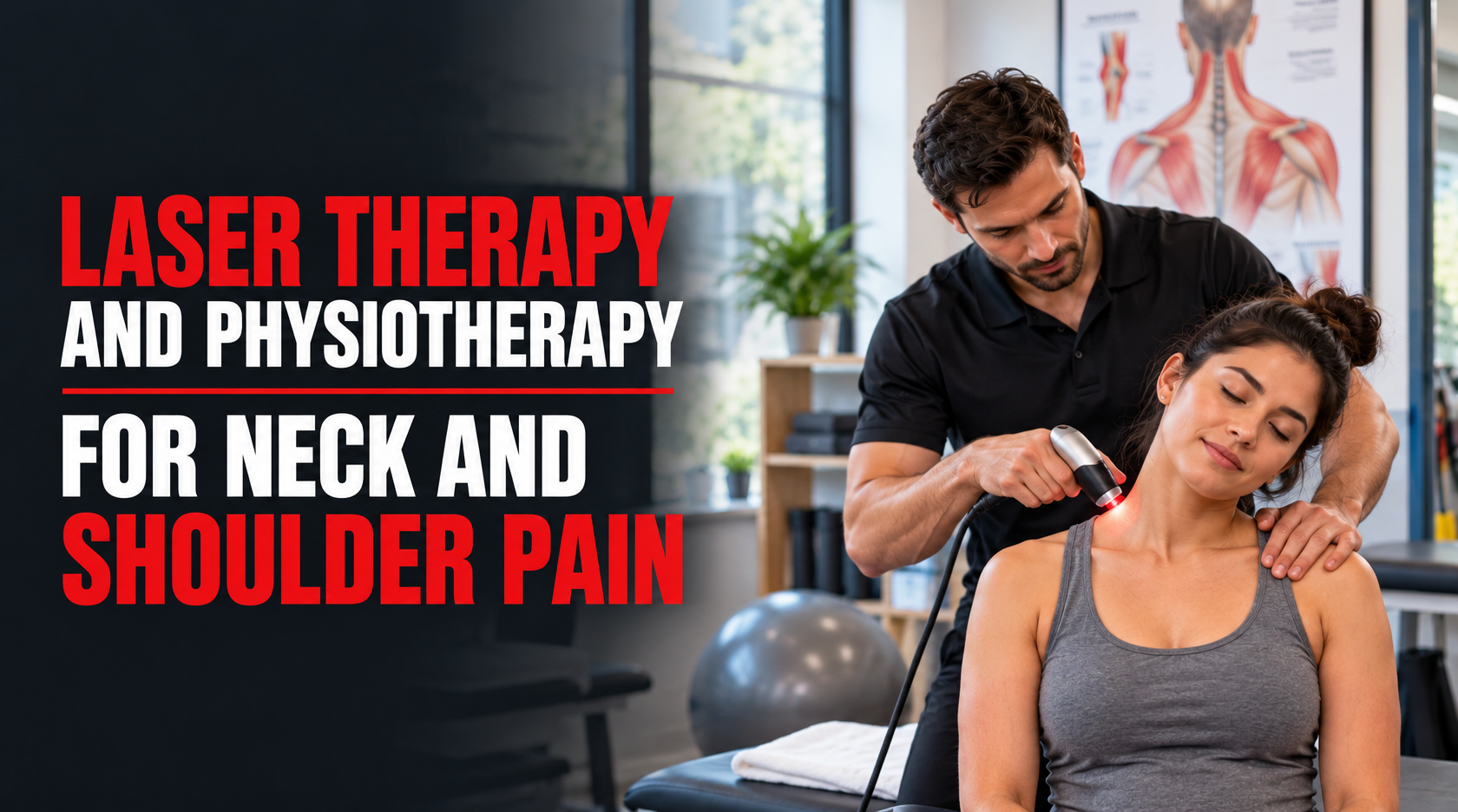
Neck and Shoulder Pain From Long Hours at a Desk? How Laser Therapy and Physiotherapy Can Support Recovery in Newmarket
Working at a desk for several hours a day can place repeated demands on the neck, shoulders, upper back, and arms. Whether you work from home, use multiple monitors in an office, or spend much of your day on a laptop, staying in one position for extended periods can make stiffness and discomfort more noticeable.
Some people develop gradual neck and shoulder soreness, while others experience headaches, reduced movement, muscle tightness, or discomfort when reaching and lifting. These symptoms can affect concentration, sleep, exercise, and everyday activities.
For people experiencing Neck Pain in Newmarket or Shoulder Pain in Newmarket, physiotherapy can help assess movement, strength, mobility, and functional limitations. Depending on the assessment, laser therapy may also be considered as part of a broader treatment programme.
Why Can Desk Work Contribute to Neck and Shoulder Discomfort?
Desk work itself does not necessarily cause an injury. However, prolonged sitting, limited movement, repetitive computer use, and sustained positions can contribute to discomfort in some people.
Common factors that may be relevant include:
- Spending long periods in one position
- Frequent computer or mouse use
- Limited movement breaks
- Poorly adjusted workstation equipment
- Increased workload or screen time
- Reduced physical activity
- Existing neck or shoulder problems
It is also important to recognise that posture is only one potential factor. Neck and shoulder symptoms can have many causes, and an individual assessment can help determine what may be contributing to them.
1. Neck Stiffness After a Full Workday
A common complaint among desk workers is neck stiffness that becomes more noticeable toward the end of the day.
You may notice difficulty:
- Turning your head
- Looking over your shoulder
- Looking up or down
- Finding a comfortable sleeping position
- Maintaining comfortable movement after prolonged sitting
If symptoms repeatedly return after desk work, an assessment may help identify relevant mobility, strength, and activity factors.
For persistent Neck Pain in Newmarket, a physiotherapy programme may include mobility exercises, strengthening, education, and strategies for managing prolonged desk-based activities.

2. Shoulder Pain During Computer Work
Shoulder discomfort can develop alongside prolonged computer use, particularly when the arms remain in similar positions for extended periods.
You may notice symptoms when:
- Using a mouse
- Typing
- Reaching for objects
- Lifting your arm
- Carrying items
- Exercising after work
Shoulder Pain in Newmarket can have many potential causes, including tendon-related problems, muscle weakness, joint stiffness, previous injuries, and changes in activity.
A physiotherapist may assess shoulder movement, strength, upper-back mobility, and functional activities to help identify relevant contributing factors.
3. How Laser Therapy May Be Used
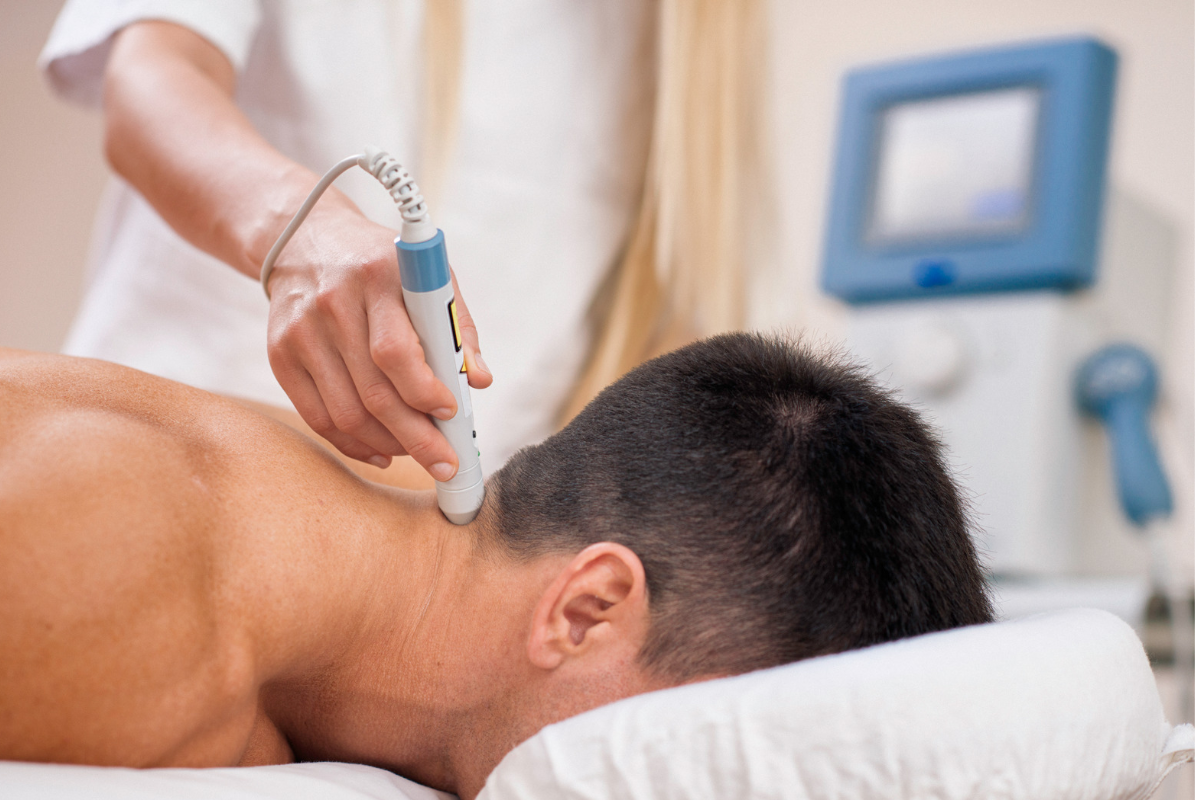
Laser therapy uses specific wavelengths of light applied to a targeted area. It may be used by healthcare professionals as part of treatment for selected musculoskeletal conditions.
Laser Therapy in Newmarket may be considered depending on the person’s symptoms, clinical findings, and treatment goals.
Laser therapy should not necessarily be viewed as a standalone solution. Depending on the condition, treatment may also involve exercise, mobility work, education, activity modification, and other physiotherapy approaches.
The suitability of laser therapy should be determined through an appropriate assessment.
4. Why Exercise Matters for Desk-Related Pain
While hands-on or other treatment approaches may help manage symptoms, active rehabilitation can be an important part of improving physical capacity.
A programme may include exercises targeting:
- Neck mobility
- Shoulder strength
- Upper-back mobility
- Scapular control
- Postural endurance
- Core and trunk strength
- General physical conditioning
The appropriate exercises depend on the person’s symptoms and physical assessment.
Physiotherapy in Angus may involve gradually progressing exercises so that the neck and shoulders can better tolerate work, exercise, and everyday physical demands.
5. Taking Movement Breaks During the Workday
One practical strategy for desk workers is to avoid remaining in exactly the same position for prolonged periods.
Movement breaks may include:
- Standing up
- Walking briefly
- Changing sitting position
- Performing appropriate mobility exercises
- Alternating between tasks
- Adjusting monitor or keyboard positioning
The goal is not to maintain a perfectly rigid posture throughout the day. Instead, regularly changing position and incorporating movement may help reduce prolonged static loading.
If discomfort continues despite changing your routine, professional assessment may be appropriate.
How Physiotherapy and Laser Therapy Can Work Together
Depending on your assessment, Laser Therapy in Newmarket may be incorporated into a broader physiotherapy programme.
For example, treatment may combine:
Symptom Management
Appropriate treatment approaches may be used to help manage symptoms and support participation in rehabilitation.
Mobility Exercises
Exercises may address relevant restrictions affecting the neck, shoulders, or upper back.
Strengthening
Progressive strengthening may improve the ability of the muscles to tolerate work and everyday demands.
Workstation and Activity Advice
Your physiotherapist may provide practical recommendations based on your work routine and physical requirements.
Gradual Return to Exercise
If neck or shoulder pain has caused you to stop exercising, rehabilitation can include a gradual return to suitable activities.
The combination of treatments varies according to each person’s condition.
Improving Your Desk Setup
A comfortable workstation may help reduce unnecessary strain during prolonged computer use.
Consider:
- Positioning the monitor at a comfortable viewing height
- Keeping frequently used items within easy reach
- Using a chair that provides appropriate support
- Keeping the keyboard and mouse positioned comfortably
- Taking regular movement breaks
- Avoiding prolonged phone use with the head held in one position
Workstation changes are not a substitute for assessment when pain persists, but they can form part of a broader approach to managing desk-related discomfort.
When Should You See a Physiotherapist?
Consider seeking an assessment if neck or shoulder symptoms:
- Continue for several weeks
- Affect your work
- Limit your range of motion
- Interfere with sleep
- Make exercise difficult
- Keep returning during desk work
- Affect everyday activities
- Are becoming progressively more limiting
For persistent Neck Pain in Newmarket or Shoulder Pain in Newmarket, an individual assessment can help determine whether physiotherapy and other treatment approaches may be appropriate.
Seek prompt medical attention if symptoms follow significant trauma or occur with severe headache, chest pain, difficulty breathing, sudden weakness, numbness, significant loss of coordination, or other concerning symptoms.
Frequently Asked Questions
1. Can sitting at a desk cause neck and shoulder pain?
Prolonged desk work may contribute to discomfort in some people, particularly when combined with limited movement, repetitive tasks, or existing musculoskeletal problems. Persistent symptoms should be assessed rather than attributed solely to desk posture.
2. Can laser therapy help with neck or shoulder pain?
Laser Therapy in Newmarket may be considered for selected musculoskeletal conditions. Its suitability depends on the individual’s symptoms, health history, clinical findings, and treatment goals.
3. Is exercise important for desk-related neck pain?
Exercise may help address mobility, strength, endurance, and physical capacity. Physiotherapy in Angus can provide an individualised programme based on the person’s assessment.
4. Should I stop working if my neck hurts?
Not necessarily. Depending on the cause and severity of symptoms, workstation adjustments, movement breaks, activity modification, and rehabilitation may allow you to continue working. More significant symptoms may require further assessment.
5. How long does desk-related neck or shoulder pain take to improve?
Recovery varies depending on the cause, duration of symptoms, physical demands, activity levels, previous injuries, and response to treatment.
6. Where can I get help for neck and shoulder pain in Newmarket?
You can discuss your symptoms and rehabilitation goals with IAM Physiotherapy Clinic in Newmarket to determine whether an assessment may be appropriate.
Support for Neck and Shoulder Pain in Newmarket
Long hours at a desk can make neck and shoulder discomfort frustrating, particularly when symptoms begin interfering with work, sleep, exercise, or everyday activities. Rather than focusing on one factor alone, it can be useful to consider movement, strength, activity levels, workstation habits, and other possible contributors.
If you are experiencing Neck Pain in Newmarket or Shoulder Pain in Newmarket, a physiotherapy assessment can help identify relevant physical and functional limitations.
Depending on your individual assessment, Laser Therapy in Newmarket may be included alongside exercise, education, mobility work, and other rehabilitation strategies. Physiotherapy in Angus can provide guidance on improving movement, strength, activity tolerance, and return to normal activities.
At IAM Physiotherapy Clinic in Newmarket, treatment can be personalised according to your symptoms, lifestyle, work requirements, and rehabilitation goals.
Our team also helps patients manage back pain, hip pain, ankle pain, foot pain, sciatica, sports injuries, arthritis-related stiffness, and general mobility concerns. Through comprehensive assessments and personalised treatment plans, we help patients achieve better balance, strength, stability, and long-term recovery.
📍 Location: 1065 Davis Dr Unit 3, Newmarket, ON L3Y 2R9, Canada
📅 Book your assessment today: https://iamphysioclinic.com
Disclaimer: This article is intended for general educational purposes only and does not replace medical diagnosis, treatment, or advice from a qualified healthcare professional. Neck and shoulder pain can have many possible causes, and treatment should be based on an appropriate individual assessment. Laser therapy may not be suitable for every person or condition. Seek prompt medical attention following significant trauma or if symptoms occur with sudden weakness, numbness, severe headache, chest pain, difficulty breathing, significant loss of coordination, or other concerning symptoms.