
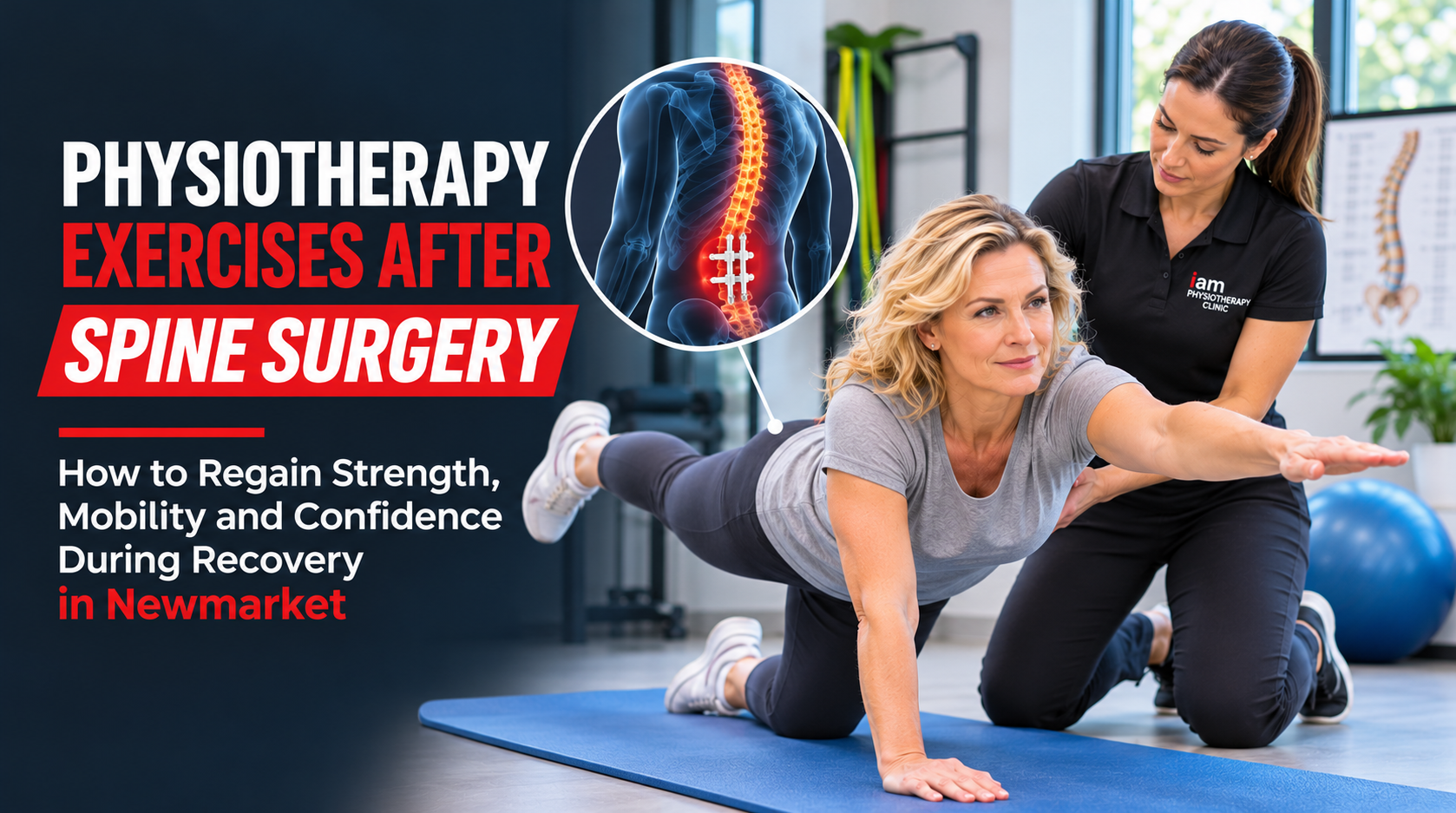
Physiotherapy Exercises After Spine Surgery: How to Regain Strength, Mobility and Confidence During Recovery in Newmarket
Recovering after spine surgery is a gradual process that requires patience, appropriate movement, and a carefully planned rehabilitation programme. Whether surgery was performed to address a herniated disc, spinal stenosis, nerve compression, or another spinal condition, the body needs time to heal and adapt. Once the surgeon confirms that rehabilitation can begin, physiotherapy can play an important role in restoring strength, improving mobility, and rebuilding confidence in everyday activities.
For many patients, the first few weeks after surgery can feel challenging. Movements such as getting out of bed, standing for longer periods, walking, or climbing stairs may initially require extra care. A structured rehabilitation plan and appropriate Physiotherapy Support in Newmarket can help patients gradually return to daily routines while respecting their surgical precautions.

Why Is Physiotherapy Important After Spine Surgery?
Spine surgery may relieve pressure on nerves, improve spinal stability, or address structural problems. However, surgery alone does not automatically restore muscle strength, flexibility, balance, or movement confidence.
During recovery, some muscles may become weaker because of reduced activity before or after surgery. Patients may also develop stiffness, altered movement patterns, and hesitation when performing familiar activities.
A personalised rehabilitation programme can help with:
- Gradually rebuilding core and supporting muscle strength.
- Improving flexibility and comfortable movement.
- Developing better posture and body awareness.
- Restoring walking ability and balance.
- Improving confidence with everyday activities.
- Reducing unnecessary strain during daily movements.
The type and timing of rehabilitation depend on the procedure performed, the patient’s overall health, and the surgeon’s instructions. Individuals recovering from Spine Surgery in Newmarket should follow their medical team’s guidance before starting exercises.
What to Expect During the Recovery Process
Recovery varies depending on the surgical procedure, the extent of the condition, and individual healing. Some people begin gentle walking soon after surgery, while others require a more gradual approach.
A physiotherapist may divide rehabilitation into progressive stages.
1. Early Recovery: Gentle Movement and Walking
The initial stage focuses on safe mobility rather than strengthening or intensive exercise. Depending on medical clearance, patients may be encouraged to take short, comfortable walks and practise basic movements.
Activities may include:
- Short, frequent walks as tolerated.
- Gentle ankle movements to encourage circulation.
- Supported changes between sitting, standing, and lying positions.
- Practising safe bed mobility.
- Breathing exercises to support relaxation and comfortable movement.
Avoid rushing through movements or attempting to increase walking distance too quickly. Follow any restrictions relating to bending, lifting, twisting, or prolonged sitting.
2. Building Core Awareness and Muscle Control
Once the surgical team permits more active rehabilitation, a physiotherapist may introduce gentle exercises to improve muscle awareness and control.
Depending on the procedure and individual precautions, these may include:
Gentle abdominal activation: While lying comfortably with knees bent, gently tighten the abdominal muscles without holding your breath or forcing the lower back into a position.
Supported pelvic movements: Small, controlled pelvic movements may be introduced when appropriate. These should not cause discomfort or place stress on the healing surgical area.
Gluteal activation: Gently tightening the buttock muscles while lying down can help reintroduce muscle engagement without requiring large movements.
These activities should only be performed when cleared by the treating clinician. A physiotherapist can demonstrate the correct technique and determine whether an exercise is appropriate.
3. Improving Strength and Mobility
As healing progresses, rehabilitation may include more functional strengthening and controlled movement exercises.
Examples can include:
- Sit-to-stand practice from a stable chair.
- Supported standing exercises.
- Gentle lower-limb strengthening.
- Gradual walking progression.
- Balance exercises near a stable support.
- Controlled hip and leg movements.
The purpose is to improve the strength and coordination needed for activities such as walking, dressing, household tasks, and returning to work.
A personalised selection of Physiotherapy Exercises in Newmarket can help patients progress according to their recovery stage instead of following a generic exercise routine.
Exercises That May Be Included in Spine Rehabilitation
Not every exercise is suitable after every spinal procedure. The following examples are commonly considered in rehabilitation, but their suitability and timing must be confirmed by the surgeon or physiotherapist.
Walking
Walking is often an important part of recovery. Begin with a comfortable distance and increase gradually according to medical advice. Maintain a relaxed posture and avoid pushing through significant pain or fatigue.
Ankle Pumps
While lying down or sitting comfortably, gently move the feet up and down. This simple movement can support circulation during periods of reduced activity. Follow the hospital team’s instructions regarding frequency.
Supported Sit-to-Stand
When cleared for this activity, practise standing up from a stable chair using controlled movement. Use your arms for support if necessary and avoid sudden twisting or bending.
Gentle Standing Weight Shifts
With a stable support nearby, gently shift your weight from one leg to the other. This may help improve balance and confidence as your mobility improves.
Gradual Lower-Limb Strengthening
Depending on surgical precautions, exercises for the thighs, hips, and legs may be introduced to support walking and everyday movement. Resistance and repetitions should increase gradually under professional guidance.
How Physiotherapy Helps Restore Confidence
Physical recovery is only one part of returning to normal activities. Some patients feel anxious about bending, walking, lifting light objects, or performing movements that previously caused pain.
A physiotherapist can help patients understand safe movement techniques and progress through activities at a manageable pace. Rehabilitation may include:
- Practising daily movements with appropriate support.
- Improving balance and coordination.
- Developing better movement habits.
- Gradually increasing activity tolerance.
- Setting realistic recovery goals.
- Monitoring symptoms and adjusting exercises.
This structured approach helps patients become more comfortable with movement while respecting the healing process.
Important Precautions After Spine Surgery
Following surgical instructions is essential. Do not assume that exercises suitable for one patient are appropriate for another. The surgeon may recommend specific restrictions depending on whether the procedure involved spinal fusion, decompression, disc surgery, or another intervention.
Keep these precautions in mind:
- Do not begin strengthening exercises without medical clearance.
- Follow prescribed restrictions on bending, lifting, and twisting.
- Avoid high-impact activities until approved.
- Do not increase exercise intensity too quickly.
- Stop an activity if it causes unusual or worsening symptoms.
- Attend recommended follow-up appointments.
Seek urgent medical advice if you develop new or worsening leg weakness, significant numbness, loss of bladder or bowel control, numbness around the groin or saddle area, fever, wound redness or discharge, or severe escalating pain. Sudden bladder or bowel changes or new saddle numbness require emergency assessment.
When Should You Start Physiotherapy?
The right time to begin physiotherapy depends on the surgery performed and the surgeon’s recovery protocol. Some patients receive mobility guidance in hospital, while more structured outpatient rehabilitation may begin after a follow-up appointment.
A physiotherapist can review your surgical instructions, assess your current mobility, and develop an appropriate recovery plan. If you are looking for Physiotherapy Treatment in Newmarket, choose a programme that considers your procedure, symptoms, movement limitations, and recovery goals.
Regain Strength and Confidence With Guided Rehabilitation in Newmarket
Recovery after spine surgery is not a race. Progress may happen gradually, and some days may feel more challenging than others. Consistent, appropriately supervised rehabilitation can support improvements in mobility, strength, balance, and everyday function.
At IAM Physiotherapy Clinic in Newmarket, patients can discuss their rehabilitation needs and work towards a programme suited to their recovery stage. With guidance from a physiotherapist and approval from the surgical team, the goal is to help patients move safely, rebuild confidence, and return to daily activities at an appropriate pace.
📍 Location: 1065 Davis Dr, Unit 3, Newmarket, ON L3Y 2R9
📅 Book your physiotherapy assessment: IAM Physiotherapy Clinic
Our team also helps patients manage back pain, hip pain, ankle pain, foot pain, sciatica, sports injuries, arthritis-related stiffness, and general mobility concerns. Through comprehensive assessments and personalised treatment plans, we help patients achieve better balance, strength, stability, and long-term recovery.
Disclaimer: This article is intended for general educational purposes only and does not replace professional medical advice, diagnosis, or treatment. Every knee condition is different, and treatment should be based on an individual assessment by an appropriately qualified healthcare professional.