
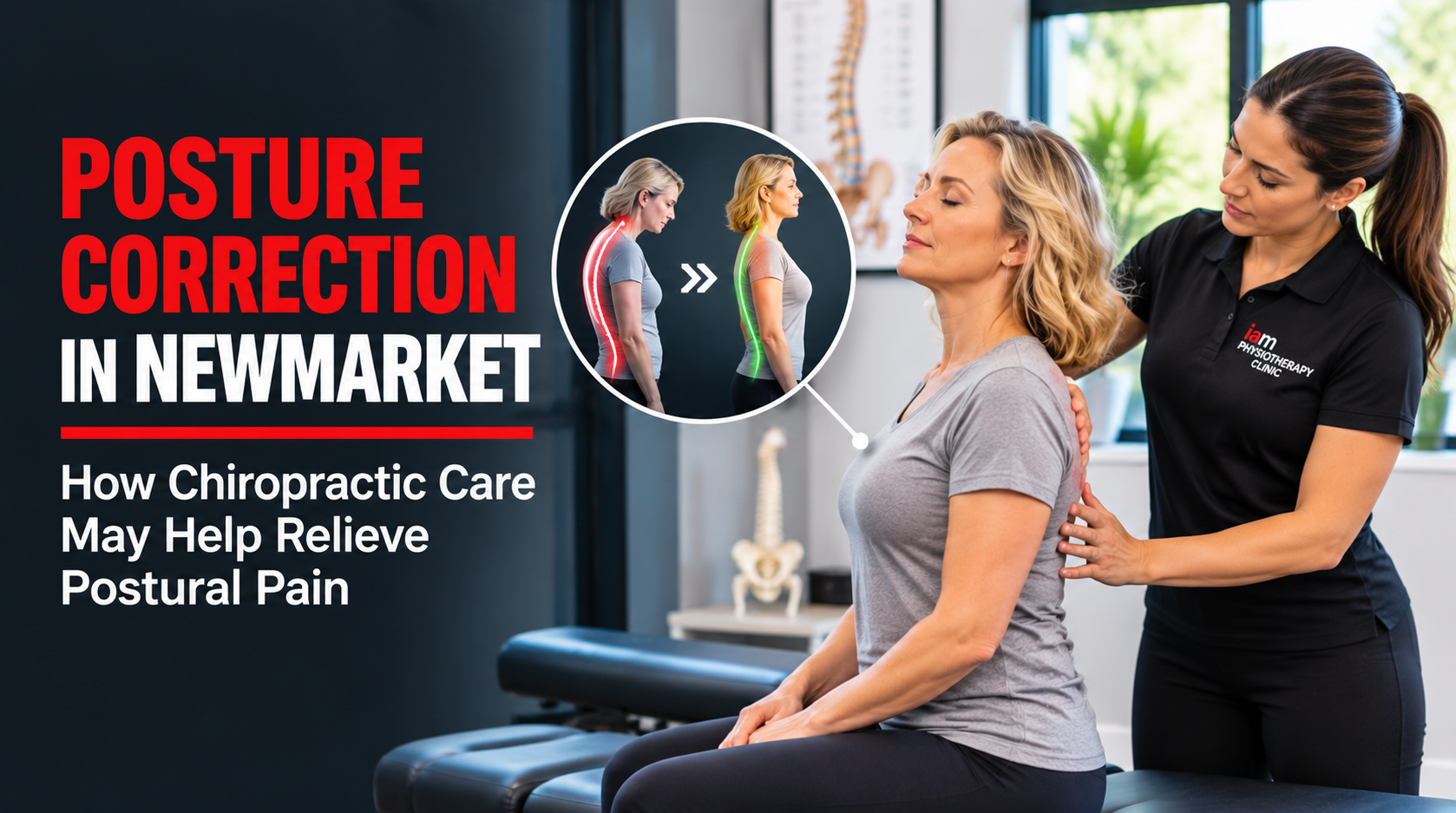
Posture Correction in Newmarket: How Chiropractic Care May Help Relieve Postural Pain
Modern lifestyles often involve long hours of sitting, working at computers, using mobile devices, and performing repetitive tasks. Over time, these habits may contribute to muscle tension, stiffness, and discomfort around the neck, shoulders, and back.
You may notice that your shoulders round forward while working, your neck feels tight after looking at a screen, or your lower back aches after sitting for extended periods. Although posture is not the only cause of musculoskeletal pain, prolonged positions and limited movement can contribute to discomfort in some people.
Posture correction involves understanding how your body moves, identifying habits that may contribute to symptoms, and improving strength, mobility, and movement control. Chiropractic care may be one component of a broader approach to managing certain postural complaints.
At IAM Physiotherapy Clinic in Newmarket, patients can explore individualised assessment and treatment options to address movement-related discomfort and improve everyday function.
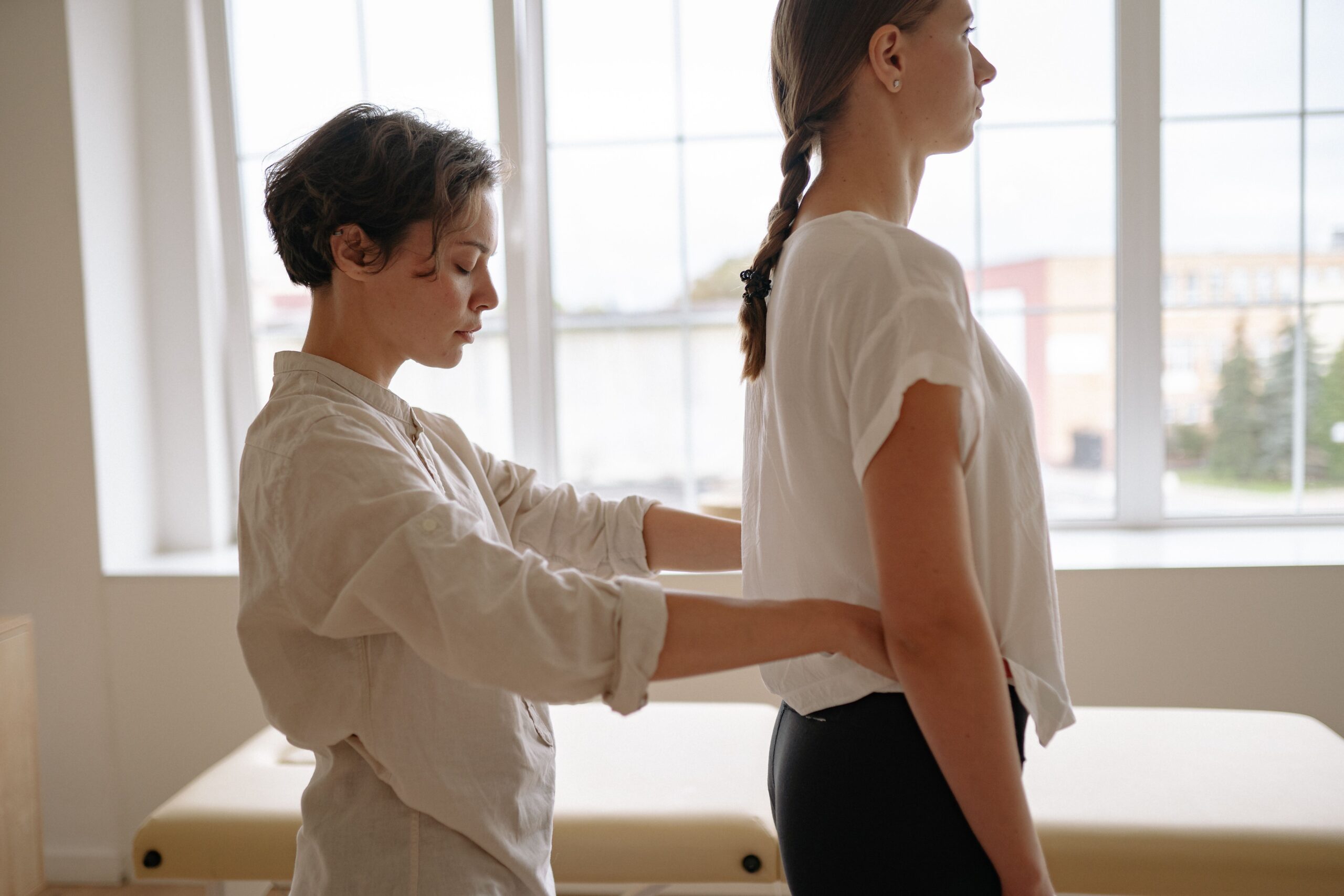
What Is Poor Posture and Why Does It Matter?
Posture describes how you position your body while sitting, standing, walking, and performing everyday activities.
There is no single perfect posture that everyone must maintain. The body is designed to move, and regularly changing positions is generally more helpful than trying to hold one rigid position throughout the day.
However, remaining in an uncomfortable or sustained position for long periods may increase muscular demands and contribute to stiffness or discomfort.
Common postural habits include:
- Sitting with the head positioned forward.
- Rounding the shoulders while working.
- Slouching when using a laptop or mobile phone.
- Leaning towards one side while standing.
- Remaining seated for several hours without movement.
- Repeatedly bending or reaching during work activities.
If these habits are accompanied by recurring discomfort, Posture Correction in Newmarket may be worth exploring as part of a personalised movement and rehabilitation plan.

Common Signs of Postural Pain
Postural discomfort can affect different areas depending on your daily activities, movement habits, and physical demands.
- Neck stiffness
Holding your head forward while looking at a screen may increase the demands on the neck and upper-back muscles. You may experience stiffness when turning your head or discomfort after prolonged computer use.
- Shoulder tightness
Rounded shoulders and prolonged upper-body positions may contribute to muscle fatigue around the shoulders and shoulder blades.
- Upper-back discomfort
Limited movement and sustained sitting may contribute to stiffness between the shoulder blades.
- Lower-back pain
Remaining seated for extended periods or repeatedly working in awkward positions may contribute to lower-back discomfort.
- Muscle fatigue
Your muscles may become tired when maintaining the same position for long periods, particularly if your work involves repetitive or physically demanding tasks.
These symptoms can have several causes. A professional assessment can help determine whether posture, muscle weakness, joint mobility, or another condition may be contributing.
What Is the Role of Chiropractic Care in Posture Correction?
Chiropractic care focuses on assessing and managing certain musculoskeletal conditions, including some types of back and neck discomfort.
Depending on your symptoms and clinical assessment, chiropractic treatment may involve joint mobilisation, spinal manipulation, soft-tissue techniques, and movement advice.
Chiropractic Care in Newmarket may be considered when postural discomfort is associated with restricted movement or musculoskeletal stiffness.
Potential treatment goals may include:
- Improving comfortable spinal movement.
- Addressing certain joint mobility restrictions.
- Managing muscle and joint discomfort.
- Supporting better movement habits.
- Helping patients return to everyday activities.
Spinal manipulation is not suitable for everyone and does not permanently correct posture. Treatment should be selected according to your health history, symptoms, preferences, and individual risk factors.
How Can Posture Correction Techniques Help?
Posture correction is not simply about pulling your shoulders backwards or sitting upright all day. It involves developing movement awareness, improving muscle capacity, and adjusting activities that contribute to discomfort.
A personalised programme may include:
- Postural assessment
Your practitioner may assess how you sit, stand, walk, and perform work-related tasks. This can help identify positions or movement patterns associated with your symptoms.
- Strengthening exercises
Exercises targeting the upper back, abdominal muscles, glutes, and shoulder stabilisers may help improve strength and endurance.
- Mobility training
Gentle movements for the neck, shoulders, thoracic spine, and hips may help improve comfortable movement.
- Manual therapy
Where appropriate, hands-on techniques may be used to help manage stiffness and support mobility.
- Ergonomic guidance
Adjustments to your workstation, chair, monitor, and daily movement routine may help reduce unnecessary physical demands.
For people exploring Posture correction techniques in Newmarket, the most appropriate approach depends on individual symptoms and functional needs.
Posture and Work-Related Musculoskeletal Issues
Many workplace activities involve repeated movements or prolonged positions that can contribute to discomfort.
Office employees may spend hours using a keyboard and mouse, while healthcare workers, tradespeople, and retail employees may perform repetitive lifting, reaching, or standing tasks.
Common concerns include:
- Neck and shoulder discomfort from computer work.
- Lower-back stiffness from prolonged sitting.
- Wrist and forearm discomfort from repetitive movements.
- Shoulder fatigue from frequent reaching.
- Back discomfort from repeated bending or lifting.
Understanding Work-related musculoskeletal issues in Newmarket can help identify how workplace demands may be affecting your movement and comfort.
Treatment may involve a combination of ergonomic adjustments, strengthening exercises, movement breaks, and appropriate hands-on care.
Five Simple Exercises to Support Better Posture
Regular movement and strengthening can help improve your ability to maintain comfortable positions throughout the day.
1. Chin Tucks
This exercise encourages controlled neck movement.
- Sit upright with your shoulders relaxed.
- Gently draw your chin backwards.
- Keep your eyes looking forward.
- Hold briefly and release.
- Repeat 8–10 times.
Avoid forcing your head backwards.
2. Shoulder Blade Squeezes
This movement activates muscles around the shoulder blades.
- Sit or stand comfortably.
- Gently draw your shoulder blades towards each other.
- Avoid shrugging your shoulders.
- Hold for a few seconds.
- Relax and repeat.
Try 10 repetitions.
3. Thoracic Extension
This exercise encourages upper-back mobility.
- Sit on a stable chair.
- Place your hands gently behind your head.
- Slowly extend your upper back over the chair’s backrest.
- Return to a comfortable upright position.
- Repeat gently.
4. Wall Angels
Wall angels help practise controlled shoulder movement.
- Stand with your back against a wall.
- Position your arms comfortably against the wall.
- Slowly slide your arms upwards.
- Lower them with control.
- Stay within a comfortable range.
Repeat 8–10 times.
5. Glute Bridges
Glute bridges strengthen muscles that support hip and trunk movement.
- Lie on your back with your knees bent.
- Place your feet flat on the floor.
- Tighten your abdominal muscles gently.
- Lift your hips comfortably.
- Lower slowly and repeat.
Begin with 10 repetitions.
These exercises should feel controlled and comfortable. Stop if they cause sharp pain, numbness, or worsening symptoms.
Practical Tips to Improve Your Daily Posture
Small changes to your daily routine can help reduce the amount of time spent in uncomfortable positions.
- Adjust your workstation: Keep your screen near eye level and position your keyboard and mouse within comfortable reach.
- Take movement breaks: Stand, walk, and change positions regularly.
- Avoid prolonged phone use with your head bent forward: Bring your device closer to eye level when practical.
- Distribute your weight comfortably: Avoid standing with all your weight shifted to one side for extended periods.
- Build strength gradually: Include appropriate exercises for your back, shoulders, abdomen, and hips.
- Change positions frequently: Instead of trying to maintain one perfect posture, allow your body to move throughout the day.
Consistent movement habits are often more useful than trying to hold a rigid posture.
When Should You Seek Professional Assessment?
Consider arranging an assessment if:
- Neck, shoulder, or back discomfort keeps returning.
- Sitting or standing for long periods becomes difficult.
- You experience reduced mobility or muscle weakness.
- Symptoms interfere with work, sleep, or daily activities.
- You notice persistent discomfort despite changing your workstation or routine.
Seek prompt medical assessment if pain follows a significant injury, you develop progressive weakness or numbness, or symptoms are accompanied by fever or unexplained weight loss. New bladder or bowel control problems or numbness around the groin with back pain require emergency medical attention.
Improve Your Movement and Posture in Newmarket
Postural discomfort can affect your ability to work, exercise, and complete everyday activities comfortably. Prolonged positions, repetitive movements, reduced strength, and limited mobility may all contribute to musculoskeletal symptoms.
Chiropractic care may help some people manage joint-related discomfort and movement restrictions, while exercise-based rehabilitation can support strength, mobility, and long-term functional improvement.
At IAM Physiotherapy Clinic in Newmarket, patients can explore individualised assessment and treatment options based on their symptoms and daily physical demands. A structured programme combining appropriate hands-on care, movement guidance, and strengthening exercises may help you work towards better comfort and mobility.
📍 Location: 1065 Davis Dr, Unit 3, Newmarket, ON L3Y 2R9
📅 Book your physiotherapy assessment: IAM Physiotherapy Clinic
Our team also helps patients manage back pain, hip pain, ankle pain, foot pain, sciatica, sports injuries, arthritis-related stiffness, and general mobility concerns. Through comprehensive assessments and personalised treatment plans, we help patients achieve better balance, strength, stability, and long-term recovery.
Disclaimer: This article is intended for general educational purposes only and does not replace professional medical advice, diagnosis, or treatment. Every knee condition is different, and treatment should be based on an individual assessment by an appropriately qualified healthcare professional.