
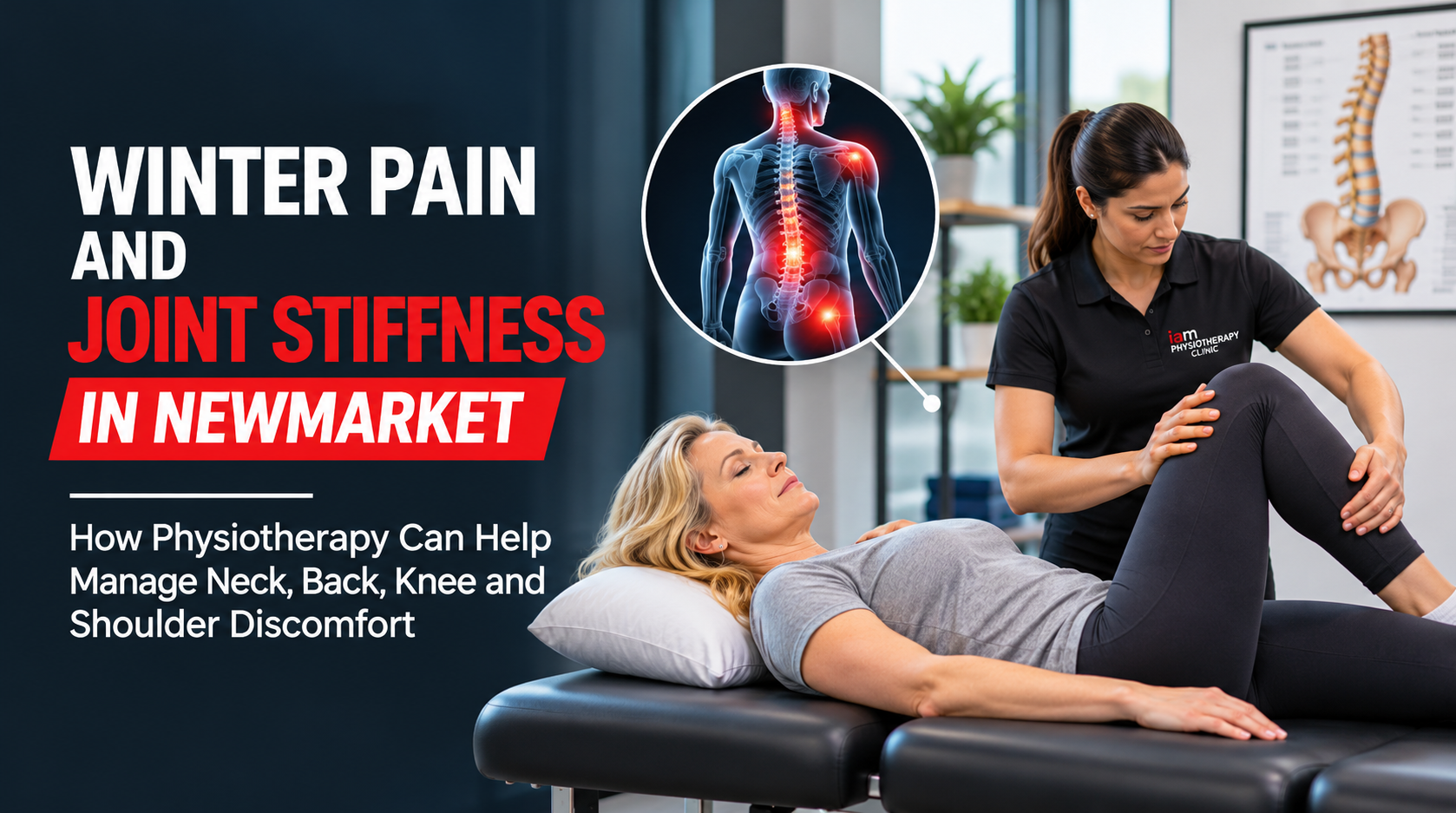
Winter Pain and Joint Stiffness in Newmarket: How Physiotherapy Can Help Manage Neck, Back, Knee and Shoulder Discomfort
Winter can bring more than colder temperatures and shorter days. For many people, the season also brings increased muscle tightness, joint stiffness, and discomfort during everyday activities. You may notice that your knees feel stiff when getting out of bed, your back aches after sitting indoors for long periods, or your neck and shoulders become uncomfortable after spending more time at a desk.
Cold weather does not necessarily cause joint conditions, but changes in activity levels, prolonged sitting, reduced outdoor exercise, and existing musculoskeletal problems can contribute to discomfort during winter.
Physiotherapy can help identify the factors affecting your movement and develop a treatment plan to improve strength, mobility, and everyday function.
At IAM Physiotherapy Clinic in Newmarket, patients can explore personalised physiotherapy approaches to manage seasonal discomfort and maintain movement throughout the colder months.4

Why Can Joint Stiffness Feel Worse During Winter?
Many people report increased stiffness during colder weather, particularly if they already experience arthritis, previous injuries, or chronic muscle and joint problems.
Several factors may contribute:
- Reduced physical activity
Cold temperatures can make outdoor walking and exercise less appealing. Spending more time indoors may reduce joint movement and contribute to muscle tightness.
- Prolonged sitting
Working from home, watching television, or sitting for extended periods can place sustained demands on the neck, shoulders, hips, and back.
- Changes in muscle activity
Cold conditions may make muscles feel tighter, particularly before movement. A gradual warm-up can help prepare the body for activity.
- Existing joint conditions
People with osteoarthritis and other musculoskeletal conditions may notice changes in their symptoms during winter. The reasons vary and are not necessarily related to temperature alone.
- Reduced flexibility and strength
When regular movement decreases, muscles may become less conditioned, making everyday tasks feel more demanding.
If you experience recurring Joint Stiffness in Newmarket, an assessment can help identify possible contributing factors and suitable treatment options.
Common Areas Affected by Winter Discomfort
Winter-related stiffness can affect different parts of the body depending on activity levels, posture, previous injuries, and underlying conditions.
1. Neck Discomfort
Spending more time at a computer or looking down at mobile devices may contribute to neck stiffness and muscle fatigue.
Common symptoms include:
- Tightness around the neck and upper shoulders.
- Discomfort when turning your head.
- Stiffness after waking up.
- Headaches associated with neck tension.
- Pain after prolonged desk work.
Gentle neck mobility exercises and appropriate workstation adjustments may help improve comfort.
2. Back Pain
Reduced movement and prolonged sitting may contribute to lower-back stiffness during winter.
You may experience:
- Aching after sitting for long periods.
- Tightness when standing up.
- Discomfort while bending or lifting.
- Reduced flexibility around the lower back and hips.
- Muscle fatigue during household activities.
Regular movement, strengthening exercises, and appropriate activity modifications may help manage these symptoms.
3. Knee Pain and Stiffness
Knee discomfort can become more noticeable when activity levels change or existing joint conditions are aggravated.
Common signs include:
- Stiffness after sitting.
- Discomfort while climbing stairs.
- Pain during squatting or kneeling.
- Reduced confidence when walking.
- Swelling or tenderness around the knee.
Maintaining appropriate leg strength and joint mobility can help support everyday movement.
4. Shoulder Discomfort
Cold-weather routines may involve more time indoors, prolonged desk work, and fewer opportunities for regular movement.
Shoulder symptoms can include:
- Tightness around the shoulder and upper arm.
- Discomfort when reaching overhead.
- Pain while putting on a coat.
- Reduced shoulder mobility.
- Difficulty sleeping on the affected side.
Persistent symptoms should be assessed to determine whether the problem involves muscles, tendons, joints, or other structures.
Understanding Neck, Back, Knee and Shoulder Discomfort in Newmarket can help you recognise when professional assessment may be beneficial.

How Can Physiotherapy Help Manage Winter Pain?
Physiotherapy focuses on identifying the causes of movement-related discomfort and developing an individualised approach to improve physical function.
At Physiotherapy in Newmarket, treatment may include:
- Comprehensive physical assessment
Your physiotherapist may assess joint mobility, muscle strength, flexibility, posture, and movement patterns. Your medical history and daily activities can also help identify possible contributing factors.
- Mobility exercises
Gentle movements may help reduce stiffness and improve comfortable movement around the neck, shoulders, back, and knees.
- Strengthening exercises
Targeted exercises can help improve the strength and endurance of muscles that support the spine and joints.
- Manual therapy
Depending on your assessment, hands-on techniques may be used to address certain movement restrictions and help manage discomfort.
- Posture and movement guidance
You may receive advice on sitting positions, workstation setup, lifting techniques, and ways to avoid remaining in one position for extended periods.
The treatment approach depends on your symptoms, physical condition, and recovery goals.
Five Simple Exercises to Help Manage Winter Stiffness
Regular movement can help maintain mobility and strength during colder months. The following exercises are general examples. Perform them within a comfortable range and stop if they cause sharp or worsening pain.
1. Neck Rotations
- Sit or stand comfortably.
- Slowly turn your head towards one side.
- Return to the centre.
- Repeat towards the opposite side.
- Avoid forcing the movement.
Try 5–8 repetitions on each side.
2. Shoulder Rolls
- Sit or stand with your arms relaxed.
- Gently roll both shoulders backwards.
- Repeat the movement forwards.
- Keep the movement smooth and controlled.
Complete 10 repetitions in each direction.
3. Cat-Cow Movement
- Begin on your hands and knees.
- Gently round your back upwards.
- Slowly return towards a comfortable neutral position and gently arch your back.
- Move smoothly without forcing your spine.
Repeat 8–10 times.
4. Sit-to-Stand
- Sit on a stable chair.
- Place your feet flat on the floor.
- Lean forward slightly and stand up.
- Slowly sit down again with control.
Start with 8–10 repetitions.
5. Gentle Knee Extensions
- Sit upright on a chair.
- Slowly straighten one knee.
- Hold briefly.
- Lower your foot in a controlled movement.
- Repeat with the other leg.
Complete 8–10 repetitions per side.
For more personalised guidance, Physiotherapy in Newmarket can help determine which exercises are appropriate for your condition and activity level.
Practical Ways to Stay Active During Winter
Maintaining regular movement can help reduce the effects of prolonged inactivity.
Consider these simple strategies:
- Take regular movement breaks: Stand up and walk briefly throughout the day.
- Warm up before exercise: Begin with gentle movements before more demanding activities.
- Maintain a comfortable indoor routine: Walking indoors, using stairs safely, or performing suitable exercises can help maintain activity.
- Adjust your workstation: Position your screen and chair to support comfortable working posture.
- Wear appropriate clothing: Dress in layers when going outdoors so you can remain comfortable while moving.
- Keep a consistent exercise routine: Regular activity is generally more useful than occasional intense workouts.
If you have an existing medical condition or persistent pain, seek professional advice before starting a new exercise programme.
When Should You Seek Physiotherapy?
Consider arranging an assessment if:
- Joint stiffness regularly affects your daily activities.
- Neck, back, knee, or shoulder pain continues for several weeks.
- You experience difficulty bending, walking, or reaching.
- Symptoms interfere with sleep or work.
- You notice reduced strength or joint mobility.
- Existing arthritis or previous injuries are affecting your activity levels.
Seek prompt medical attention if pain follows a significant injury, you develop sudden weakness or numbness, or a joint becomes hot, red, and significantly swollen. Back pain accompanied by new bladder or bowel control problems or numbness around the groin requires emergency medical assessment.
Stay Active and Manage Winter Discomfort in Newmarket
Winter does not have to mean avoiding movement or accepting persistent stiffness. Although colder weather and seasonal routine changes can make existing discomfort more noticeable, maintaining appropriate activity and addressing movement limitations can help support joint health.
A combination of mobility exercises, strengthening, posture guidance, and individualised treatment may help improve comfort and everyday function.
At IAM Physiotherapy Clinic in Newmarket, patients can explore personalised assessment and Physiotherapy Rehabilitation in Newmarket to address neck, back, knee, and shoulder discomfort. A structured rehabilitation programme can help improve strength, mobility, and confidence during everyday activities throughout winter.
📍 Location: 1065 Davis Dr, Unit 3, Newmarket, ON L3Y 2R9
📅 Book your physiotherapy assessment: IAM Physiotherapy Clinic
Our team also helps patients manage back pain, hip pain, ankle pain, foot pain, sciatica, sports injuries, arthritis-related stiffness, and general mobility concerns. Through comprehensive assessments and personalised treatment plans, we help patients achieve better balance, strength, stability, and long-term recovery.
Disclaimer: This article is intended for general educational purposes only and does not replace professional medical advice, diagnosis, or treatment. Every knee condition is different, and treatment should be based on an individual assessment by an appropriately qualified healthcare professional.