
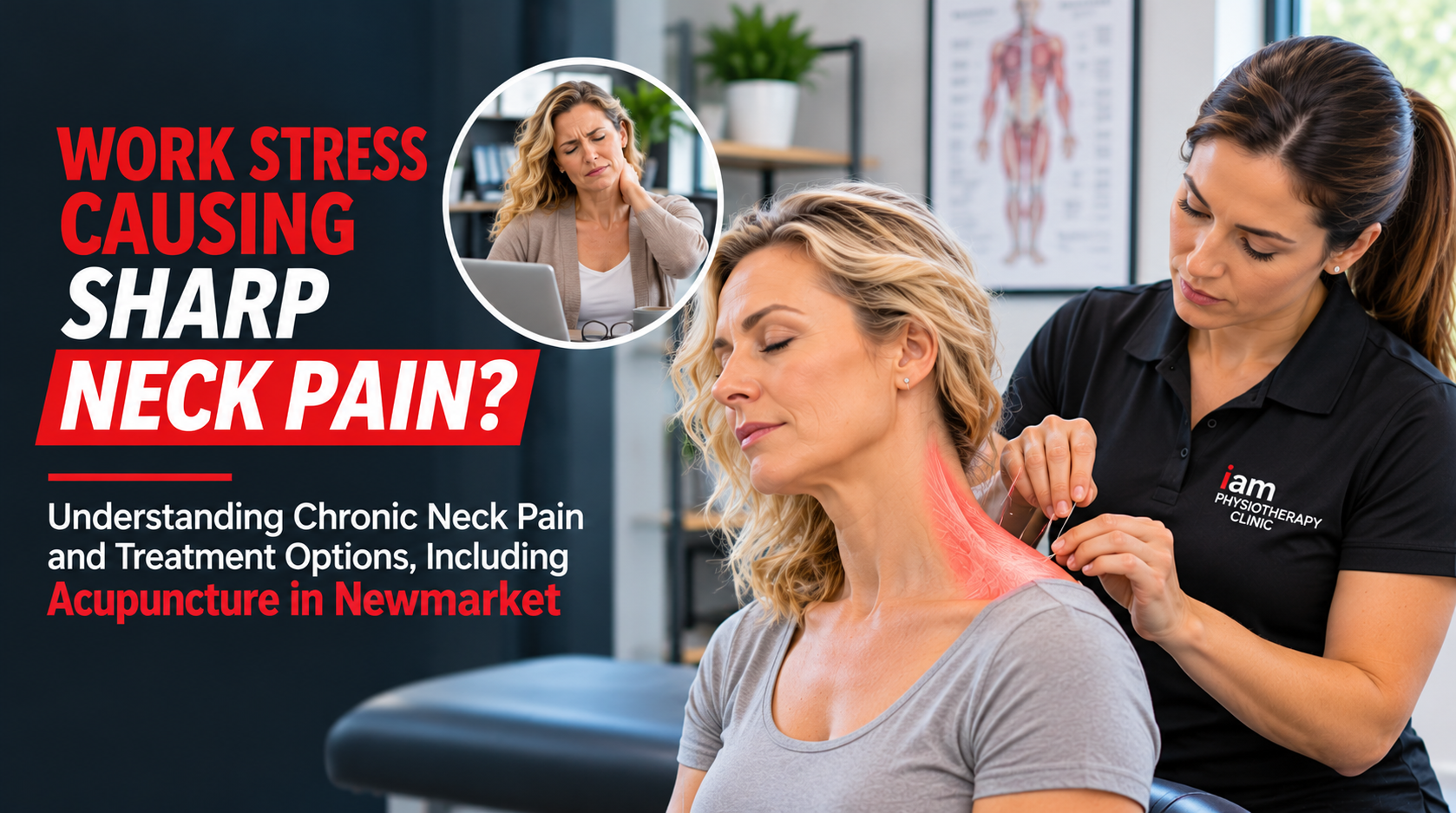
Work Stress Causing Sharp Neck Pain? Understanding Chronic Neck Pain and Treatment Options, Including Acupuncture in Newmarket
Work-related stress can affect more than your mood and energy levels. Long working hours, demanding responsibilities, prolonged computer use, and limited opportunities to take breaks may contribute to muscle tension and discomfort around the neck and shoulders.
You may notice a sharp sensation when turning your head, stiffness after sitting at your desk, or an aching feeling that spreads towards your shoulders. While stress does not explain every case of neck pain, it can contribute to muscle tension, changes in sleep, and increased sensitivity to discomfort.
When neck pain becomes persistent or starts affecting your work and daily activities, identifying the underlying cause is important. Physiotherapy, appropriate stress-management strategies, and selected treatments such as acupuncture or dry needling may help manage symptoms.
At IAM Physiotherapy Clinic in Newmarket, patients can explore individualised assessment and treatment options to address neck discomfort, improve mobility, and support everyday function.

Can Work Stress Cause Sharp Neck Pain?
Stress can influence how your body responds to physical and emotional demands. During stressful periods, some people unconsciously tighten their neck and shoulder muscles, clench their jaw, or maintain a tense posture.
When these patterns continue alongside prolonged sitting or repetitive work activities, they may contribute to discomfort.
Common contributing factors include:
- Muscle tension
Stress may cause you to hold tension around the neck, shoulders, and upper back. Sustained muscle activity can contribute to soreness and stiffness.
- Prolonged desk work
Spending hours looking at a computer screen without changing positions may increase the physical demands on the neck and upper-back muscles.
- Poor workstation setup
A screen positioned too low, an uncomfortable chair, or repeatedly turning towards a second monitor may contribute to awkward neck positions.
- Reduced movement
Busy schedules can make it difficult to take breaks, stretch, or move regularly. Staying in one position for long periods may increase stiffness.
- Poor sleep and fatigue
Stress can affect sleep quality. Poor sleep and fatigue may make it harder to manage discomfort and recover from everyday physical demands.
If these factors are contributing to recurring Neck Pain in Newmarket, an assessment can help identify possible causes and suitable treatment options.
What Does Chronic Neck Pain Feel Like?
Neck pain can vary from mild stiffness to sharp or persistent discomfort. Some people experience symptoms around the neck alone, while others notice pain extending into the shoulders or upper back.
Common symptoms include:
- Sharp or aching pain when turning the head.
- Stiffness after prolonged sitting.
- Tightness around the shoulders and upper back.
- Discomfort when looking down at a phone or laptop.
- Reduced neck movement.
- Headaches associated with neck tension.
- Pain that becomes more noticeable during stressful work periods.
Pain that travels into the arm, particularly when accompanied by tingling, numbness, or weakness, may indicate nerve involvement and should be assessed.
How Does Stress Influence Neck Pain?
Stress and physical discomfort can influence each other. When you are under pressure, your muscles may remain tense for longer periods, and you may become less physically active.
Stress can also affect how the nervous system processes pain. This means discomfort may feel more intense or harder to manage during periods of poor sleep, anxiety, or prolonged emotional strain.
A helpful approach involves addressing both physical and lifestyle factors.
Strategies that may support Stress relief in Newmarket include:
- Taking short breaks during demanding workdays.
- Practising slow, comfortable breathing.
- Maintaining a regular sleep routine.
- Including gentle physical activity in your day.
- Setting up a comfortable workstation.
- Making time for relaxation outside work.
These strategies do not replace treatment for an underlying neck condition, but they may complement a broader recovery plan.
How Can Physiotherapy Help Manage Chronic Neck Pain?
Physiotherapy can help identify the physical factors contributing to neck discomfort and develop a programme to improve mobility, strength, and movement control.
At IAM Physiotherapy Clinic, treatment may include:
- Neck and upper-back assessment
Your physiotherapist may assess neck mobility, muscle strength, shoulder movement, posture, and symptom patterns. Your work routine and medical history may also be considered.
- Mobility exercises
Gentle neck and upper-back movements may help improve comfortable movement and address stiffness.
- Strengthening exercises
Exercises targeting the deep neck muscles, shoulder blade stabilisers, and upper-back muscles may help improve muscular endurance.
- Manual therapy
Where appropriate, hands-on techniques may be used to help manage stiffness and support comfortable movement.
- Workplace and activity guidance
Your physiotherapist may recommend workstation adjustments, movement breaks, and changes to activities that aggravate symptoms.
The aim is to improve your ability to manage daily activities while building strength and movement confidence.
Can Acupuncture Help With Neck Pain?
Acupuncture is a treatment approach that involves inserting fine needles into selected points on the body. It may be considered as an option for some people experiencing persistent musculoskeletal pain.
Some individuals report short-term improvements in pain and muscle discomfort following acupuncture. However, responses vary, and it is not guaranteed to provide relief for everyone.
Potential benefits may include:
- Temporary reduction in pain for some individuals.
- Improved comfort during movement.
- Support for managing muscle-related discomfort.
- An additional treatment option alongside exercise-based rehabilitation.
Acupuncture Treatment in Newmarket may be considered after reviewing your symptoms, medical history, and treatment goals.
Acupuncture should be performed by an appropriately trained practitioner using sterile, single-use needles. It may not be suitable for everyone, particularly people with certain bleeding risks, skin infections, or other medical considerations.

What Is the Difference Between Acupuncture and Dry Needling?
Although both approaches use fine needles, they are not identical.
Acupuncture is traditionally based on specific points and treatment principles. In musculoskeletal care, it may be used as one approach to managing pain.
Dry needling generally targets specific muscles or sensitive areas, often called trigger points, with the aim of addressing muscular pain and tension.
Depending on the assessment, Dry needling Technique in Newmarket may be considered for selected muscle-related conditions.
Neither approach should replace an appropriate assessment or a rehabilitation programme when ongoing strength and movement improvements are needed. Temporary soreness or bruising can occur, and treatment suitability should always be discussed with a qualified practitioner.
Simple Exercises to Help Relieve Neck Tension
Gentle exercises may help maintain neck mobility and reduce stiffness associated with prolonged sitting.
1. Chin Tucks
- Sit upright with your shoulders relaxed.
- Gently draw your chin backwards.
- Keep your eyes looking forward.
- Hold briefly and release.
- Repeat 8–10 times.
2. Shoulder Rolls
- Sit or stand comfortably.
- Slowly roll your shoulders backwards.
- Repeat in the opposite direction.
- Keep the movement relaxed.
Complete 10 repetitions in each direction.
3. Gentle Neck Rotations
- Sit upright.
- Slowly turn your head towards one side.
- Return to the centre.
- Repeat towards the opposite side.
- Stay within a comfortable range.
4. Shoulder Blade Squeezes
- Sit or stand with your arms relaxed.
- Gently bring your shoulder blades towards each other.
- Hold for a few seconds.
- Relax and repeat.
Try 10 repetitions.
Stop if an exercise causes sharp pain, dizziness, or symptoms spreading into your arm.
When Should You Seek Professional Assessment?
Consider arranging an assessment if:
- Neck pain continues for several weeks.
- Sharp discomfort repeatedly affects head movement.
- Pain interferes with sleep or work.
- Stiffness limits everyday activities.
- Symptoms spread into the shoulder or arm.
- You experience recurring headaches alongside neck discomfort.
Seek urgent medical attention if neck pain is accompanied by sudden severe headache, fever with significant neck stiffness, new weakness or numbness, difficulty walking, or symptoms following a significant injury. Chest pain, breathlessness, or sweating alongside neck or arm discomfort also requires emergency assessment.
Take the Next Step Towards Neck Pain Relief in Newmarket
Work stress, prolonged sitting, muscle tension, and reduced movement can all contribute to neck discomfort. However, sharp or persistent neck pain should not automatically be attributed to stress.
A proper assessment can help identify whether symptoms are related to muscular tension, joint restrictions, nerve irritation, or another condition.
At IAM Physiotherapy Clinic in Newmarket, patients can explore personalised treatment options, including physiotherapy and suitable needling approaches where appropriate. A combination of targeted exercises, movement guidance, and selected hands-on treatments may help improve mobility and manage ongoing discomfort.
📍 Location: 1065 Davis Dr, Unit 3, Newmarket, ON L3Y 2R9
📅 Book your physiotherapy assessment: IAM Physiotherapy Clinic
Our team also helps patients manage back pain, hip pain, ankle pain, foot pain, sciatica, sports injuries, arthritis-related stiffness, and general mobility concerns. Through comprehensive assessments and personalised treatment plans, we help patients achieve better balance, strength, stability, and long-term recovery.
Disclaimer: This article is intended for general educational purposes only and does not replace professional medical advice, diagnosis, or treatment. Every knee condition is different, and treatment should be based on an individual assessment by an appropriately qualified healthcare professional.