
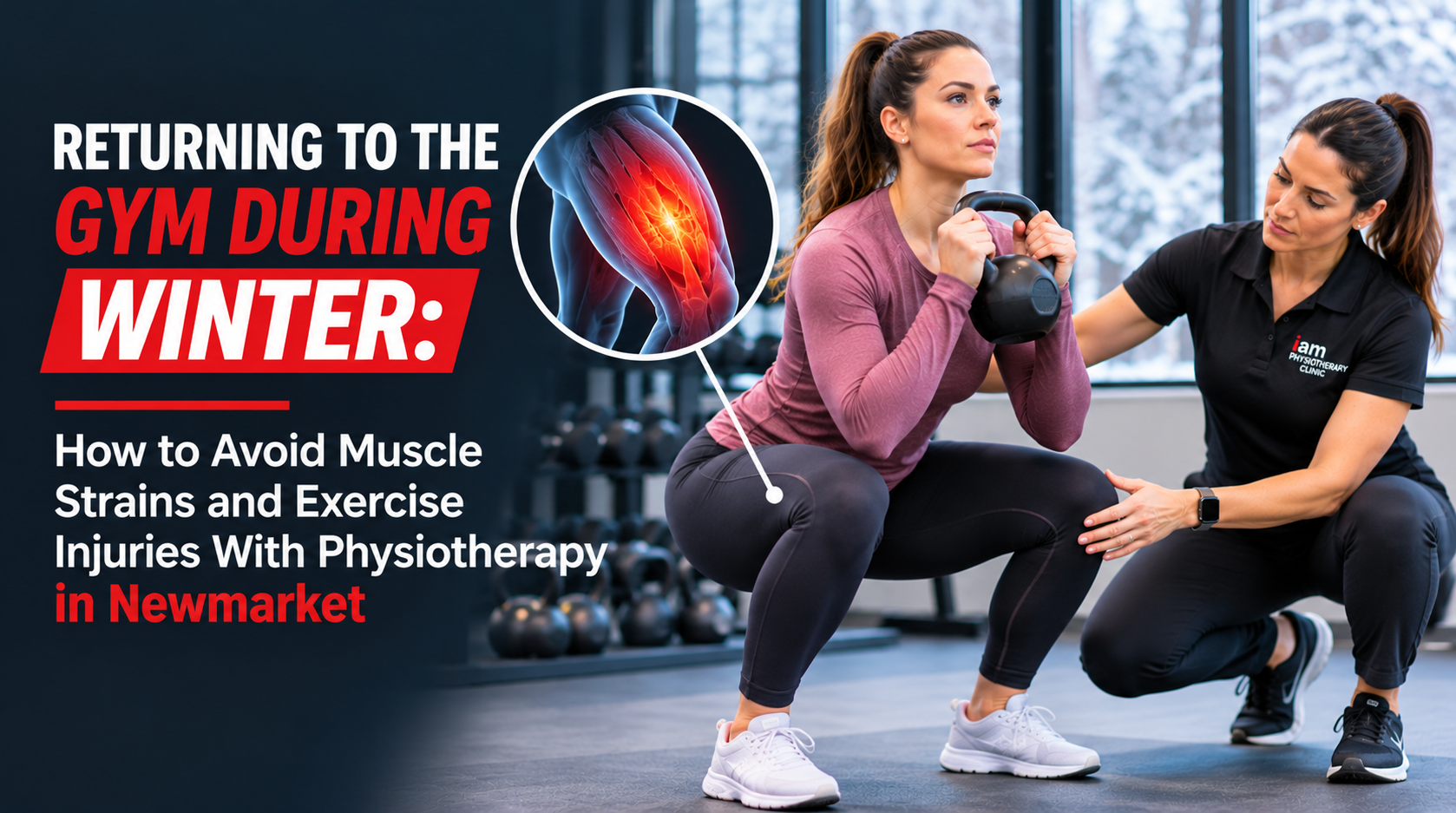
Returning to the Gym During Winter: How to Avoid Muscle Strains and Exercise Injuries With Physiotherapy in Newmarket
Winter often changes our daily routines. Colder temperatures, shorter days, and less outdoor activity can lead to reduced movement, muscle stiffness, and a decline in fitness. When people return to the gym after weeks or months of inactivity, they may be tempted to resume their previous workout intensity. However, suddenly increasing exercise loads can place unnecessary stress on muscles, joints, and tendons.
Whether you are restarting weight training, returning to cardio, or trying to maintain your fitness during winter, preparing your body for exercise is important. Understanding the causes of Muscle Strains in Newmarket and taking a gradual approach to training can help reduce injury risks and support a more consistent fitness routine.

Why Winter Can Increase the Risk of Gym Injuries
During winter, many people spend more time indoors, sit for longer periods, and become less physically active. Reduced movement can contribute to stiffness in the hips, shoulders, back, and legs.
When the body is not regularly exposed to physical activity, muscles may have less endurance, and joints may feel less comfortable during demanding movements. Returning suddenly to heavy lifting, sprinting, jumping, or intense workouts can increase the risk of Exercise Injuries in Newmarket.
Common factors contributing to gym injuries include:
- Skipping warm-ups or starting with heavy weights.
- Poor lifting technique.
- Limited flexibility or joint mobility.
- Increasing training intensity too quickly.
- Exercising when fatigued.
- Insufficient recovery between workouts.
- Ignoring early signs of discomfort.
Muscles, tendons, and joints need time to adapt to changes in physical activity. A gradual progression is particularly important after a prolonged break from exercise.
Common Muscle Strains and Exercise Injuries
1. Hamstring Strains
The hamstrings are located at the back of the thigh and help bend the knee and extend the hip. Sudden movements, sprinting, deadlifts, or exercising without adequate preparation can overload these muscles.
Symptoms may include pain at the back of the thigh, tightness, tenderness, and difficulty walking or bending the knee.
2. Lower Back Strains
The lower back is involved in many gym exercises, including deadlifts, squats, rows, and overhead movements.
Poor technique, excessive resistance, fatigue, or sudden twisting movements may cause lower back discomfort. Strengthening the supporting muscles and practising proper lifting mechanics can help improve movement control.
3. Shoulder Strains
Shoulder muscles are frequently involved in bench presses, overhead presses, lateral raises, and pulling exercises.
Limited shoulder mobility, excessive training volume, or poor positioning can contribute to irritation and discomfort around the shoulder joint.
4. Knee Pain
Exercises such as lunges, squats, running, and stair climbing increase the demands placed on the knees.
A sudden increase in repetitions, resistance, or exercise frequency may aggravate knee discomfort, particularly when the muscles supporting the knee are not adequately conditioned.
5. Calf and Achilles Tendon Injuries
Running, skipping, jumping, and explosive exercises can place significant demands on the calf muscles and Achilles tendon. Increasing activity too quickly may contribute to calf strains or tendon irritation.
How to Prepare Your Body Before a Winter Workout
A warm-up helps gradually increase circulation, muscle activity, and movement readiness before more demanding exercise.
Begin With Light Cardio
Spend approximately five to ten minutes walking on a treadmill, cycling, or performing another comfortable low-intensity activity.
Start slowly and gradually increase your pace. Avoid beginning your workout with sudden high-intensity movements.
Perform Dynamic Mobility Exercises
Dynamic movements help prepare the joints and muscles for exercise.
Consider incorporating:
- Arm circles and shoulder rotations.
- Gentle leg swings.
- Hip rotations.
- Walking lunges within a comfortable range.
- Ankle mobility movements.
- Controlled trunk rotations.
Avoid aggressive stretching or forcing movements when your muscles feel stiff.
Start With Lighter Weights
Before lifting your working weight, perform lighter warm-up sets. This allows you to practise the movement, assess your technique, and gradually prepare the muscles for greater resistance.
How to Return to the Gym Safely
If you have been inactive during winter, avoid trying to match your previous workout performance immediately.
A gradual return may include:
- Starting with lighter resistance.
- Reducing the number of sets initially.
- Avoiding training to complete exhaustion.
- Allowing adequate recovery between sessions.
- Increasing workout duration and intensity gradually.
- Maintaining proper technique throughout each movement.
- Stopping if you experience sharp or worsening pain.
Consistency is more beneficial than completing an intense workout and then needing several days away because of discomfort.
Exercises to Improve Strength and Movement Control
A balanced exercise routine can help improve strength, coordination, and stability. The following exercises may be useful when appropriate for your fitness level and performed without pain.
Bodyweight Squats
Stand with your feet approximately shoulder-width apart. Slowly bend your hips and knees, lowering yourself into a comfortable squat. Return to standing in a controlled manner.
Squats help strengthen the thighs, glutes, and muscles involved in everyday activities.
Glute Bridges
Lie on your back with your knees bent and feet flat. Gently engage your core and lift your hips without arching excessively. Lower slowly.
This exercise helps activate the gluteal muscles and supports hip strength.
Bird-Dog Exercise
Begin on your hands and knees. Extend one arm and the opposite leg while keeping your trunk stable. Return slowly and alternate sides.
Bird-dog exercises help develop coordination, balance, and core control.
Wall Push-Ups
Stand facing a wall and place your hands against it. Bend your elbows to move your chest towards the wall, then push back.
This is a useful starting point for rebuilding upper-body strength before progressing to more demanding push-up variations.
Exercises should be modified according to your mobility, fitness level, and any existing injuries.
How Physiotherapy Helps Prevent Gym Injuries
Physiotherapy can help identify movement restrictions, muscle weakness, joint stiffness, and exercise-related problems that may affect your training.
An assessment may include:
- Muscle strength and endurance testing.
- Shoulder, hip, knee, and ankle mobility.
- Balance and coordination.
- Posture and movement patterns.
- Squatting and lifting technique.
- Previous injuries and current symptoms.
A personalised Physiotherapy in Newmarket programme may include strengthening exercises, mobility training, movement retraining, and guidance on modifying gym workouts.
Physiotherapy can also help individuals recovering from existing injuries understand when and how to gradually return to exercise. Instead of repeatedly aggravating the same muscles, patients can work on improving the factors contributing to discomfort.
When Should You Seek Physiotherapy?
Consider an assessment if you experience recurring muscle tightness, joint discomfort, restricted movement, or pain that affects your workouts or daily activities.
Seek medical attention promptly if you experience severe pain, significant swelling, inability to bear weight, sudden weakness, or other concerning symptoms following exercise.
Early assessment can help identify the underlying problem and determine whether you need rehabilitation, exercise modification, or further medical investigation.
Stay Active and Injury-Free This Winter in Newmarket
Winter is a good opportunity to rebuild fitness, improve strength, and establish healthier exercise habits. However, your body needs time to adapt after a break from physical activity.
At IAM Physiotherapy Clinic in Newmarket, patients can receive guidance on improving mobility, rebuilding strength, managing discomfort, and returning to gym activities safely. A personalised Physiotherapy Treatment in Newmarket programme may help address movement limitations, improve exercise technique, and support a progressive return to training.
Warm up properly, increase your training load gradually, prioritise recovery, and listen to your body. These habits can help you maintain your fitness routine throughout winter while reducing the risk of avoidable injuries.
Our team also helps patients manage back pain, hip pain, ankle pain, foot pain, sciatica, sports injuries, arthritis-related stiffness, and general mobility concerns. Through comprehensive assessments and personalised treatment plans, we help patients achieve better balance, strength, stability, and long-term recovery.
📍 Location: Newmarket, ON
📅 Book your MVA & WSIB Rehabilitation assessment: https://iamphysioclinic.com/
Disclaimer: This article is for educational purposes only and should not replace professional medical advice. If you have been involved in a motor vehicle accident or sustained a workplace injury, consult a qualified healthcare professional and a registered physiotherapist for an individualized assessment and rehabilitation plan.